Engagement Rings UK Editorial
Contributing Editor
Lab-Grown Diamond
Engagement Rings UK
Same diamond. Same sparkle. Same certifications. 30–50% less money. Here's everything UK buyers actually need to know — the good, the bad, and the stuff other sites don't mention.
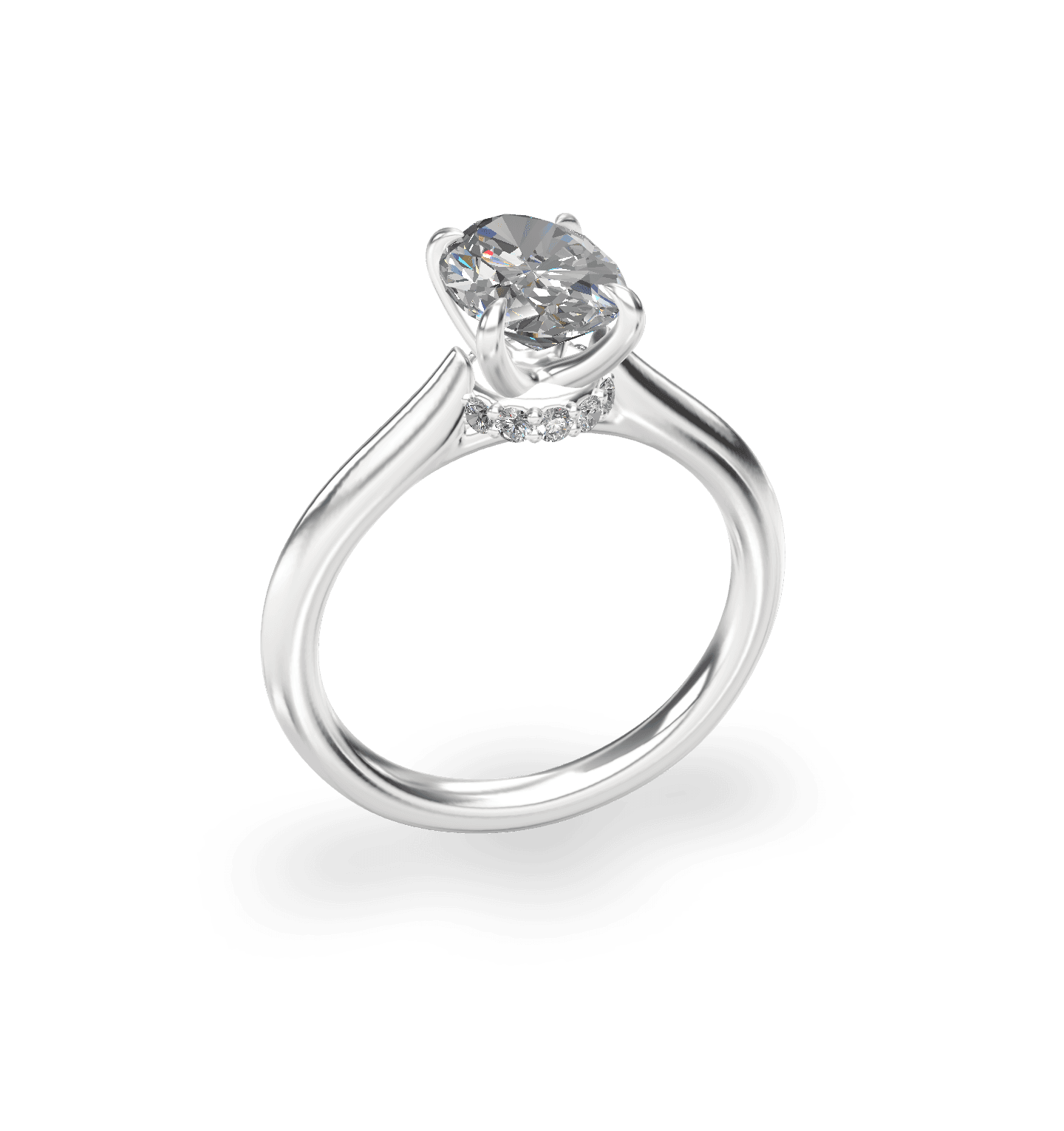
What are lab-grown diamonds?
Lab-grown diamonds are real diamonds. Full stop. They're made of pure crystallised carbon — the exact same material as a diamond that formed underground over billions of years. They have the same hardness (10 on Mohs), the same refractive index, the same fire, the same chemical composition. A jeweller cannot tell the difference with a loupe.
What they are not: they're not cubic zirconia, not moissanite, not “simulated” or “diamond-like.” Those are different materials entirely. A lab-grown diamond IS a diamond — it just didn't come from a mine.
The UK market has shifted dramatically. In 2020, lab-grown accounted for roughly 5% of engagement ring sales. By 2026, estimates put it at 35–45% of the UK market and growing. Among buyers under 35, it's approaching 60%.
How lab-grown diamonds are made
Two methods, both producing identical results:
HPHT
High Pressure, High Temperature
Mimics how diamonds form in the earth. A carbon source is subjected to extreme pressure (1.5 million PSI) and heat (1,500°C). A small diamond seed grows into a larger crystal over days to weeks.
CVD
Chemical Vapour Deposition
A diamond seed is placed in a chamber filled with carbon-rich gas (usually methane). The gas is heated to plasma, and carbon atoms deposit onto the seed layer by layer. Generally produces higher clarity stones.
Lab vs natural — the real differences
We're going to be completely honest here. Both have genuine advantages.
| Lab-Grown | Natural | |
|---|---|---|
| Chemical composition | Pure carbon crystal | Pure carbon crystal |
| Hardness | 10 (Mohs) | 10 (Mohs) |
| Sparkle & fire | Identical | Identical |
| Certification | GIA, IGI | GIA, IGI |
| Price (1ct, good quality) | £800–£1,500 | £2,500–£4,500 |
| Resale value | Lower | 30–50% of retail |
| Supply | Unlimited | Finite (mining) |
| Environmental impact | Energy-dependent | Mining impact |
| Emotional value | Personal preference | Tradition & rarity |
Can you tell the difference? Neither can a jeweller.
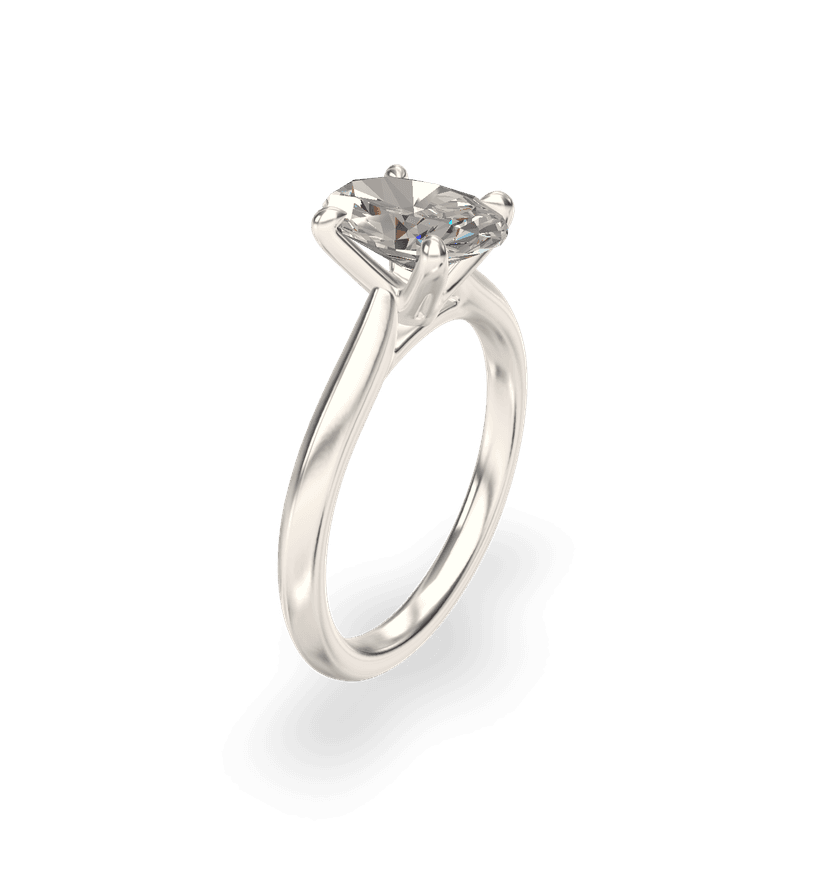
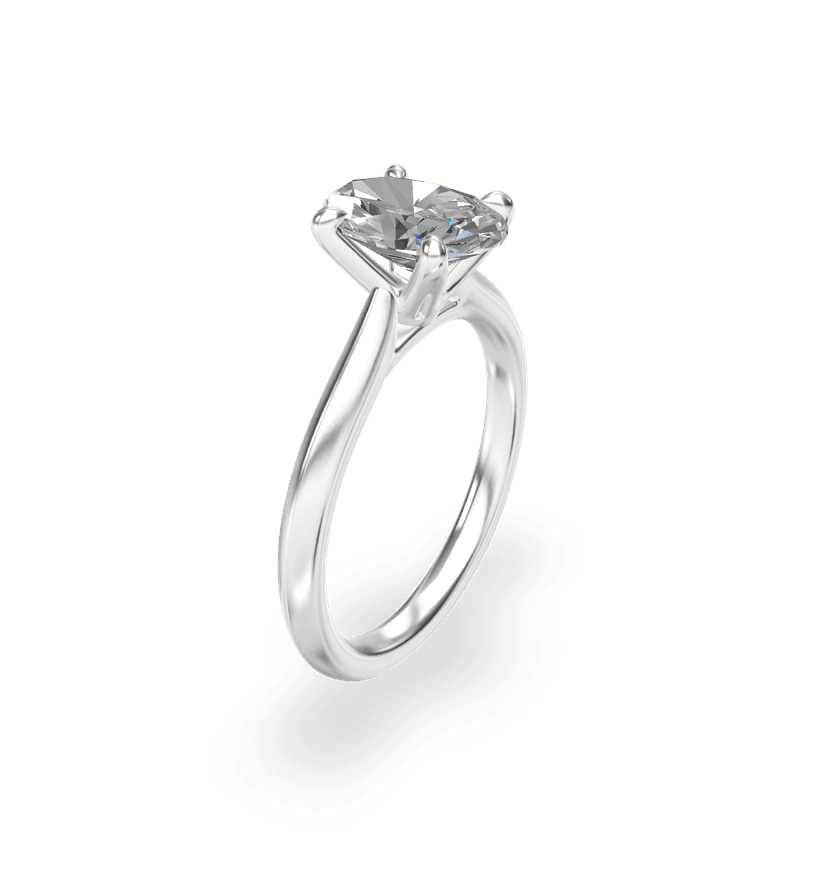
Same diamond, same ring. The only difference is origin — and the price tag.
UK prices in 2026
Real prices from UK jewellers — solitaire settings in white gold or platinum. These are what you'll actually pay, not “starting from” marketing figures.
| Ring | Natural | Lab-Grown | You save |
|---|---|---|---|
| 0.5ct round, 18ct white gold | £1,200–£2,500 | £500–£1,000 | 55–60% |
| 1ct round, 18ct white gold | £2,500–£4,500 | £800–£1,500 | 60–70% |
| 1ct oval, platinum | £3,000–£5,500 | £1,200–£2,800 | 50–60% |
| 1.5ct round, platinum | £5,000–£10,000 | £2,000–£4,000 | 55–65% |
| 2ct round, platinum | £8,000–£20,000 | £3,000–£6,500 | 60–70% |
The honest downsides
We wouldn't be an independent guide if we only told you the good parts. Here's what you should genuinely consider:
Resale value is lower
Natural diamonds retain roughly 30–50% of their retail value. Lab-grown resale is less established and likely lower, especially as production costs continue to fall. If you care about the ring as a financial asset, natural is stronger.
Prices are falling
Lab-grown diamond prices have dropped 30–40% in the past 3 years as production scales. This is great for buyers now, but means the diamond you buy today may cost significantly less in 5 years. Natural diamond prices are more stable.
Some people care about "natural"
Your partner, your family, or you might place value on a diamond that formed in the earth over billions of years. That’s a legitimate emotional preference — not everyone sees diamonds as purely functional. Have the conversation before buying.
Environmental claims are complicated
Lab-grown avoids mining, but the energy required to grow a diamond is significant. If the lab uses renewable energy, the footprint is genuinely lower. If it uses coal power (as some do), it’s debatable. Ask your jeweller about their supply chain.
Certification: GIA & IGI
Both major gemological laboratories certify lab-grown diamonds using the same grading criteria as natural: cut, colour, clarity, and carat weight. The certificate will clearly state “Laboratory-Grown Diamond.”
GIA (Gemological Institute of America) is the gold standard globally. Their lab-grown reports use the same rigorous grading. IGI (International Gemological Institute) certifies the majority of lab-grown diamonds and is widely trusted in the UK market.
Our advice: always buy a certified diamond, whether lab-grown or natural. An uncertified stone is a gamble — you have no independent verification of quality. Read our 4Cs guide to understand exactly what the certificate numbers mean.
Where to buy lab-grown rings in the UK
MOH London (Hatton Garden)Featured
One of the UK’s leading lab-grown diamond specialists. Based at 71 Hatton Garden with a comprehensive online ring builder. Wide selection of GIA and IGI certified stones. Strong on transparency — every diamond comes with full certification and 360° imaging.
Visit website →77 Diamonds
Online-first jeweller with a large lab-grown selection. Good filtering tools and competitive pricing. They also have a Mayfair showroom for in-person viewing.
Hatton Garden independents
Many Hatton Garden jewellers now stock lab-grown alongside natural. Walk the street, ask to see both side by side. You’ll see there’s no visible difference.
Queensmith
Hatton Garden jeweller with a modern approach. Good selection of lab-grown options and a well-designed online experience. In-person consultations available.
See a lab-grown diamond ring in 3D
Design your ring from 66,420 combinations. Choose your diamond, setting, metal, and carat — rendered with real-time ray-traced reflections.
Open the ring builder