Engagement Rings UK Editorial
Contributing Editor
Lab-Grown vs Natural
Diamonds
The honest comparison. No agenda, no sponsor bias — just facts, real UK prices, and a clear framework to help you decide which is right for you.
The Short Answer
Lab-grown and natural diamonds are chemically identical. Same carbon crystal structure, same hardness, same sparkle. A jeweller cannot tell them apart without specialist equipment.
The differences are: price (lab-grown costs 50–70% less), resale value (natural holds value better), and what it means to you (tradition vs pragmatism).
Neither is “better.” The right choice depends entirely on your values and budget. This guide gives you the facts to decide.
What Is a Lab-Grown Diamond?
A lab-grown diamond is a real diamond created in a controlled laboratory environment using one of two methods:
- HPHT (High Pressure High Temperature): Mimics the natural process by subjecting a carbon seed to extreme pressure (1.5 million pounds per square inch) and temperature (1,500°C). This was the original method, developed in the 1950s.
- CVD (Chemical Vapour Deposition): A diamond seed is placed in a chamber filled with carbon-rich gas (usually methane). The gas is heated to 800–1,200°C, breaking down the carbon atoms which then deposit layer by layer onto the seed. This is the more common modern method and can produce very high quality stones.
HPHT
High pressure + high temperature compress carbon into diamond
CVD
Carbon gas deposits layer by layer onto a diamond seed
The process takes 2–6 weeks for a gem-quality stone. The resulting diamond has the same crystal structure, optical properties, and physical hardness as a natural diamond that took 1–3 billion years to form underground.
Lab-grown diamonds are not cubic zirconia, moissanite, or crystal. Those are diamond simulants — they look similar but have different chemical compositions. Lab-grown diamonds are actual diamonds.
Side-by-Side Comparison
Can you tell the difference? Neither can a jeweller.
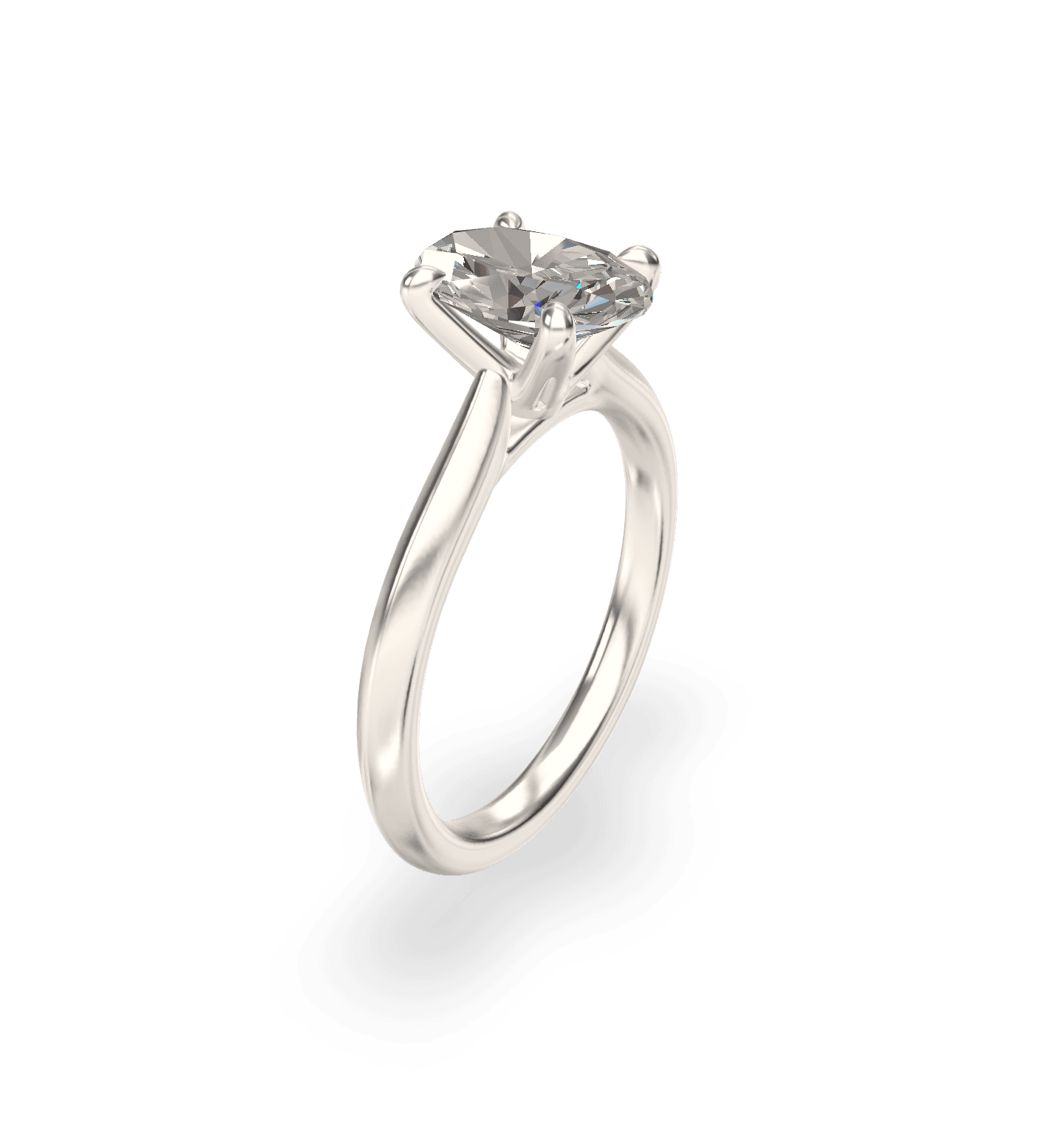
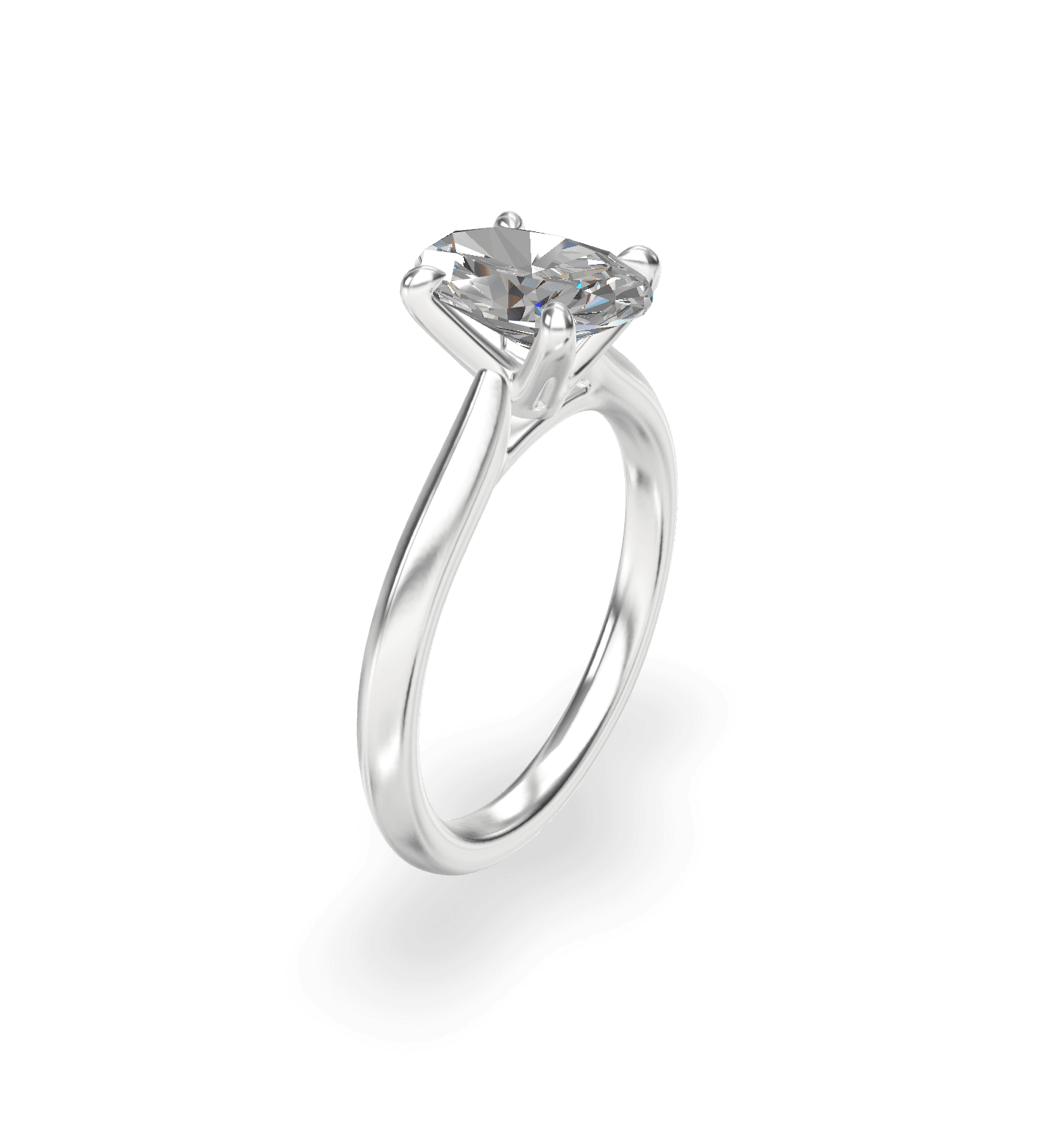
Same diamond, same ring. The only difference is how it was made — and the price.
| Feature | Lab-Grown | Natural |
|---|---|---|
| Chemical composition | Pure carbon (identical) | Pure carbon |
| Hardness (Mohs) | 10 | 10 |
| Brilliance & fire | Identical | Identical |
| GIA/IGI certified | Yes | Yes |
| 1ct round (VS2, G, Exc.) price | £900–£1,400 | £3,500–£5,500 |
| 2ct round (VS2, G, Exc.) price | £1,800–£2,800 | £14,000–£22,000 |
| Resale value | 10–20% of purchase | 30–50% of purchase |
| Price trend | Declining (production scaling) | Stable to rising |
| Conflict risk | None | Low (Kimberley Process) |
| Carbon footprint | Varies by energy source | Varies by mine |
| Rarity | Unlimited production | Finite supply |
| Emotional / symbolic | Modern, practical | Traditional, romantic |
Price Comparison — Real UK Prices (2026)
These are diamond-only prices from reputable UK suppliers (September 2026). Setting costs (£200–£800) are additional. The savings increase dramatically with carat weight — this is because natural diamond pricing scales exponentially while lab-grown pricing scales more linearly.
| Diamond Spec | Lab-Grown | Natural | Saving |
|---|---|---|---|
| 0.5ct Round, VS2, G, Excellent | £500–£750 | £1,400–£2,200 | 60–65% |
| 1.0ct Round, VS2, G, Excellent | £900–£1,400 | £3,500–£5,500 | 70–75% |
| 1.0ct Oval, VS2, F, Excellent | £800–£1,200 | £3,200–£5,000 | 70–76% |
| 1.5ct Round, VS1, F, Excellent | £1,400–£2,000 | £7,000–£12,000 | 80–83% |
| 2.0ct Round, VS2, G, Excellent | £1,800–£2,800 | £14,000–£22,000 | 85–87% |
| 3.0ct Round, VS2, G, Excellent | £2,800–£4,500 | £35,000–£55,000 | 90–92% |
Prices are for loose diamonds only, excluding setting. Based on UK independent and online jeweller pricing, September 2026.
The practical impact: for a budget of £2,000 (including setting), you could get a natural 0.5–0.6ct ring or a lab-grown 1.2–1.5ct ring. For many buyers — especially under-35s — that's a compelling difference. See our full cost guide for complete ring prices (diamond + setting).
Resale Value — The Honest Truth
This is where the two diverge most significantly, and it's the argument most often cited against lab-grown diamonds. Let's be straightforward about it.
Natural diamonds retain roughly 30–50% of their retail value if you sell them second-hand. A 1.0ct natural diamond bought for £4,000 might fetch £1,200–£2,000 at resale. They're not a good “investment” (gold and property perform better), but they do hold meaningful value.
Lab-grown diamonds currently have very limited resale value — roughly 10–20% of purchase price, and some dealers won't buy them back at all. As production scales and prices continue to fall, a lab-grown diamond bought today will be cheaper to produce tomorrow. This is the economic reality.
But here's the counter-argument: most people never sell their engagement ring. If you're buying a ring to wear forever, resale value is academic. The £2,000–£3,000 you save by going lab-grown is real money you have today. That could be a holiday, a deposit contribution, or simply staying out of debt.
Our view: if resale value genuinely matters to you (you see the ring partly as a store of value), go natural. If you see it as a beautiful object you'll wear forever, lab-grown gives you more beauty for less money.
Ethics & Environmental Impact
Both sides have legitimate arguments. Here's an honest assessment:
The case for lab-grown (ethics)
- No risk of conflict diamonds whatsoever
- No artisanal mining with poor labour conditions
- No land displacement or habitat destruction from mining
- Full traceability from laboratory to retailer
The case for natural (ethics)
- The Kimberley Process (since 2003) has reduced conflict diamonds to less than 1% of global trade
- Diamond mining supports 10 million livelihoods worldwide, primarily in developing nations
- Botswana's diamond industry funds 30–40% of government revenue — schools, hospitals, infrastructure
- Canadian and Australian mines operate under strict environmental and labour regulations
Environmental impact
This is more nuanced than marketing suggests. Lab-grown diamonds are energy-intensive to produce — a single carat requires roughly 250–750 kWh of electricity. If that electricity comes from coal (as in some Chinese and Indian facilities), the carbon footprint can be significant.
However, producers increasingly use renewable energy. Some UK-facing brands now offer “carbon-neutral” lab-grown diamonds produced with verified renewable energy.
Natural diamond mining disrupts land and uses water, but modern mines are required to rehabilitate sites. Both options have a footprint — neither is perfectly “green.” If environmental impact is your primary concern, look for specific certifications rather than assuming one category is inherently better.
Who Should Buy Which?
Lab-grown is probably right if you:
- Want the biggest, best-looking diamond for your budget
- Don't plan to sell the ring (most people don't)
- Value the ethical certainty of lab production
- Are on a tighter budget but don't want to compromise on size
- Are under 35 and your social circle already sees lab-grown as normal
Natural is probably right if you:
- Value rarity and the romance of a billion-year-old stone
- Want the ring to hold meaningful resale value
- See the diamond as a family heirloom to pass down
- Are comfortable with the budget for a natural stone you're happy with
- Your partner has expressed a preference for natural
The most important thing: if your partner has an opinion, follow it. This is her ring. If she's expressed any preference — directly or indirectly — that trumps every financial or ethical argument. Read our how to choose guide for more on understanding what she actually wants.
Compare both in 3D
Our ring builder has 66,420 combinations. Design with lab-grown or natural diamonds and get real quotes from UK jewellers — free, no obligation.
Open the ring builder