Engagement Rings UK Editorial
Contributing Editor
Average Cost of
Engagement Rings UK 2026
Forget the 'two months' salary' myth. Here's what engagement rings actually cost in Britain in 2026 — with real prices, regional breakdowns, and honest comparisons between lab-grown and natural diamonds.
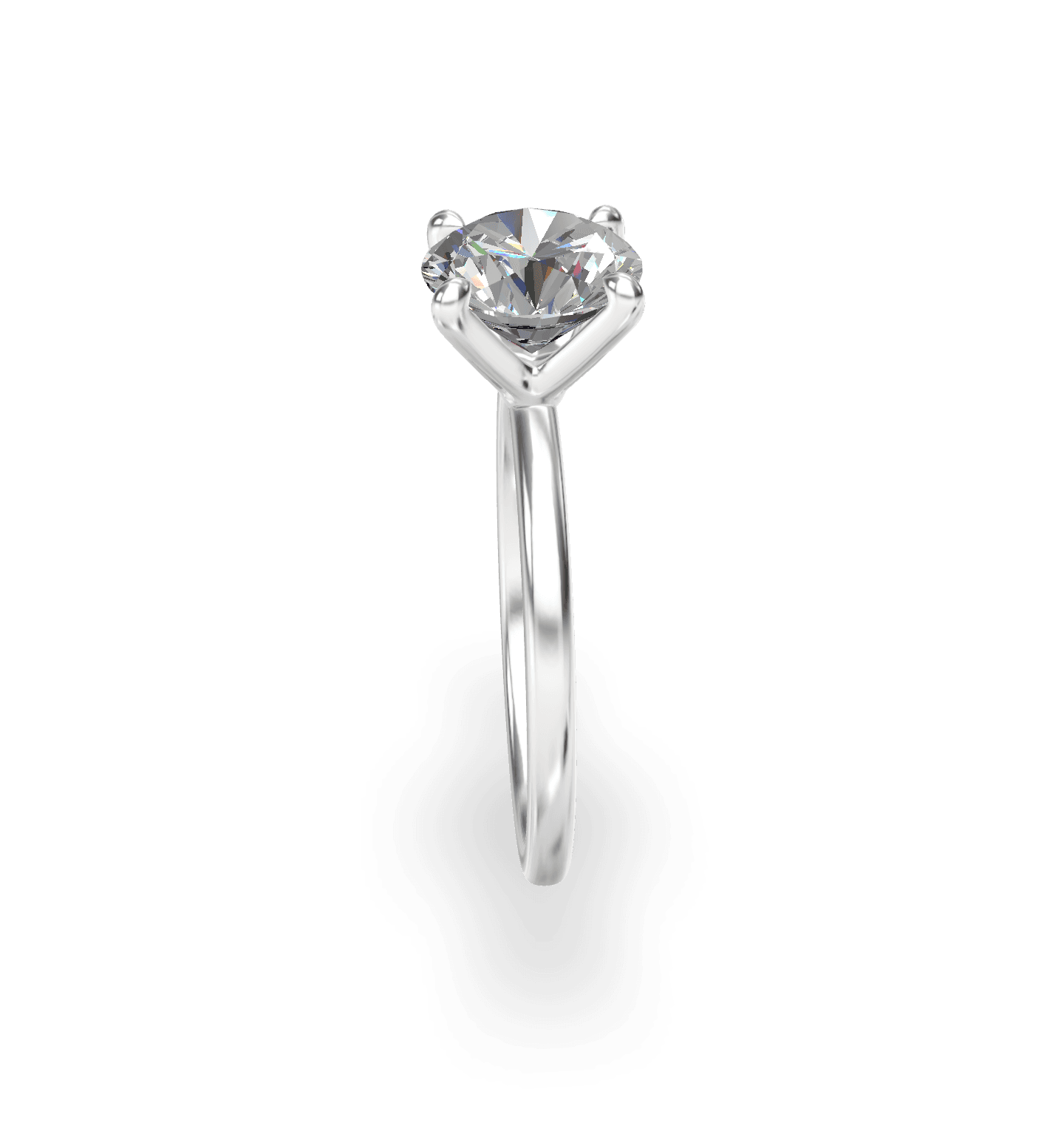
What the UK Average Actually Is
The most cited figure is £2,000–£3,500 for a natural diamond engagement ring. That comes from a combination of industry surveys (De Beers, The Knot UK) and jeweller sales data. But averages are misleading — they're pulled upwards by a small number of very expensive purchases.
The median — what a typical buyer actually pays — is closer to £1,500–£2,500. And if you're open to lab-grown diamonds, that drops to £800–£1,800 for equivalent visual quality.
In 2026, we're seeing a clear generational split. Buyers under 35 are spending less on the stone (often choosing lab-grown) and more on the setting and craftsmanship. Buyers over 40 still lean towards natural diamonds and traditional retailers.
Average Spend by Region
Where you live (and where you buy) has a significant impact on what you'll pay. London inflates the national average considerably. Outside the capital, prices are noticeably more reasonable — especially if you buy from independent jewellers rather than high-street chains.
| Region | Average Spend | Note |
|---|---|---|
| London & South East | £3,500–£5,000 | Highest spend — Mayfair & Bond Street skew the average |
| South West & Wales | £2,200–£3,200 | Close to the national average |
| Midlands | £2,000–£3,000 | Birmingham Jewellery Quarter offers excellent value |
| North West | £1,800–£2,800 | Manchester's independent scene keeps prices competitive |
| North East & Yorkshire | £1,600–£2,500 | Leeds has a growing cluster of independents |
| Scotland | £1,800–£2,800 | Edinburgh jewellers offer strong craftsmanship |
| Northern Ireland | £1,500–£2,400 | Smaller market, often ordered online from mainland UK |
Data compiled from jeweller surveys, industry reports, and our own analysis of UK pricing in 2025–2026.
How Ring Style Affects Cost
The setting itself — the metalwork that holds the diamond — typically costs £200–£800 depending on complexity and metal choice. But some settings require more diamond weight:
- Solitaire — the most affordable setting (£200–£400). All attention is on the centre stone, so you need a good one.
- Halo — the small surrounding diamonds add £200–£500 to the setting cost, but let you use a smaller (cheaper) centre stone that still looks impressive.
- Three-stone — adds £400–£1,200 for the side stones, depending on their size and quality.
- Pavé band — adds £150–£400 for the tiny diamonds set into the band.
- Vintage/detailed metalwork — hand-engraving and milgrain can add £100–£300 to labour costs.
Setting cost comparison
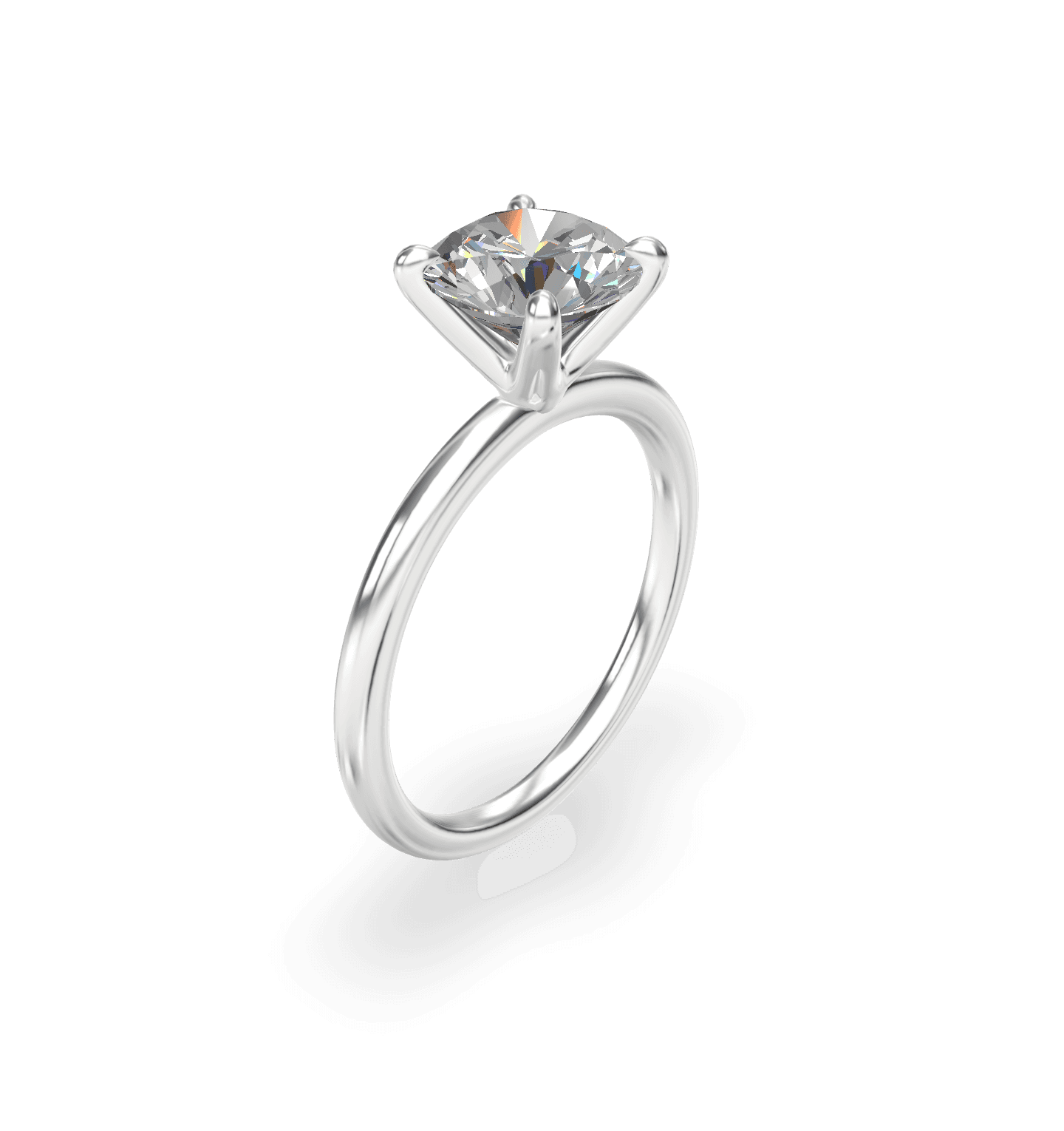
Solitaire
£200–£400 setting
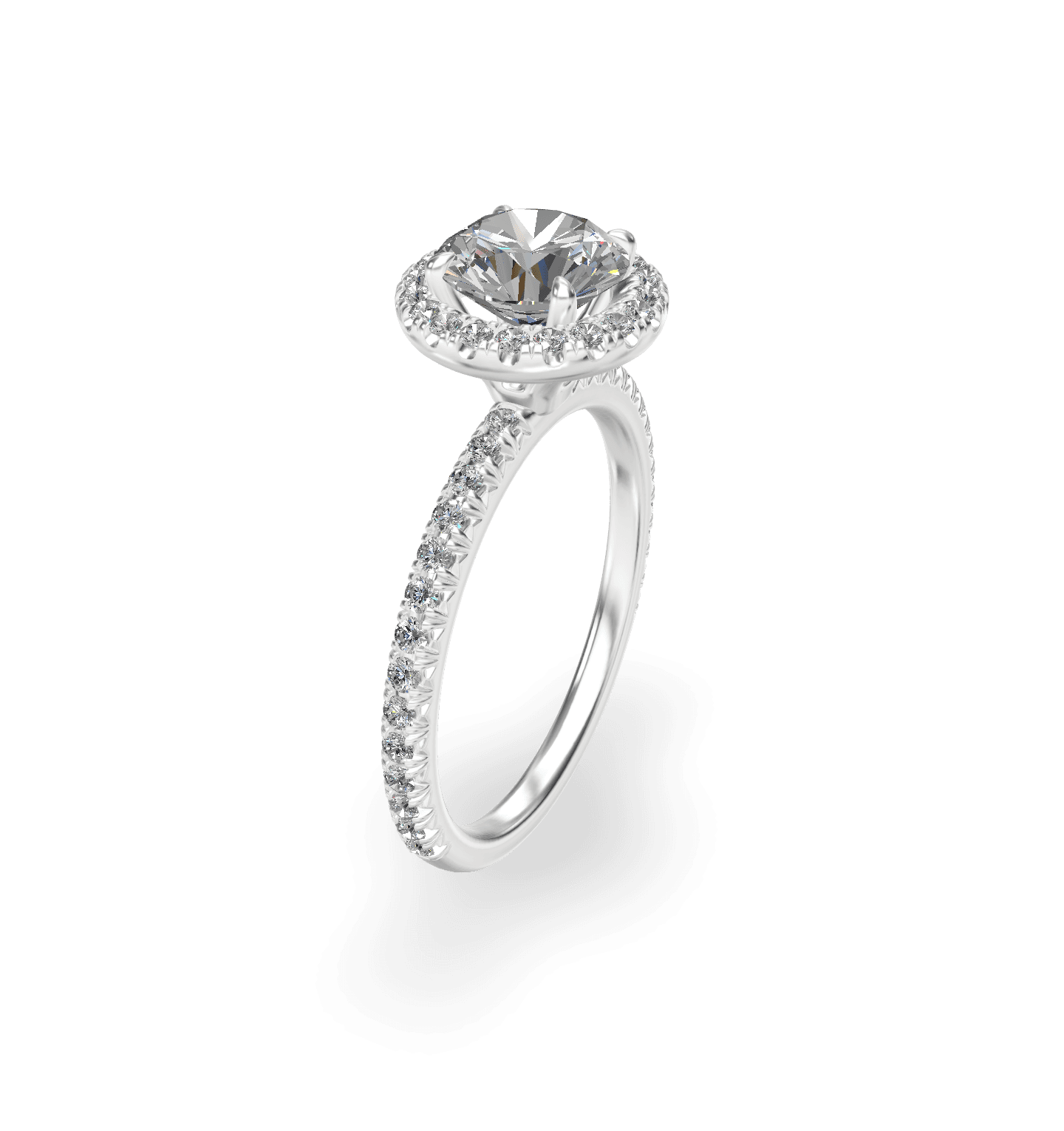
Halo
£400–£900 setting
The clever move: a halo setting with a 0.7ct centre stone can look larger than a 1.0ct solitaire — and cost significantly less. See our how to choose guide for more detail.
How Carat Weight Affects Price
Diamond pricing is not linear. A 2.0ct diamond does not cost twice as much as a 1.0ct — it costs 3–4 times as much. This is because larger rough diamonds are exponentially rarer.
The “magic numbers” in diamond pricing are 0.50, 1.00, 1.50, and 2.00 carats. Prices jump sharply at each of these thresholds. A 0.98ct diamond can cost 10–15% less than a 1.01ct of the same quality — but looks identical on the finger.
Our advice: buy just below a magic number. A 0.90–0.95ct diamond is the sweet spot for value if you want “about a carat.” You'll save £500–£1,500 compared to a full carat with no visible difference.
Learn more about what makes a diamond look its best in our 4Cs guide.
Lab-Grown vs Natural Diamond Pricing
This is the single biggest factor in what you'll pay. Lab-grown diamonds are chemically, optically, and physically identical to natural ones — but they cost 50–70% less.
The price gap has widened since 2023 as lab-grown production has scaled. In 2026, a 1.0ct round brilliant (VS2, G colour, Excellent cut) costs roughly:
- Lab-grown: £900–£1,400
- Natural: £3,500–£5,500
1ct round, VS2/G/Excellent — UK prices 2026
Same diamond. Same beauty. 50–70% price difference.
That means for the same budget, you can either get a natural 0.5ct or a lab-grown 1.2–1.5ct. The trade-off? Natural diamonds hold roughly 30–50% of their value for resale; lab-grown diamonds have minimal resale value currently.
For the full breakdown, read our lab-grown vs natural comparison.
Real UK Prices — 2026 Comparison Table
These prices reflect what you'd actually pay at reputable UK jewellers (independent and online) in September 2026. High-street chains typically charge 20–40% more.
| Ring Specification | Lab-Grown | Natural |
|---|---|---|
| 0.5ct Round, VS2, G, Lab-Grown, 18ct White Gold Solitaire | £600–£900 | £1,400–£2,200 |
| 0.7ct Round, VS2, G, Lab-Grown, 18ct White Gold Solitaire | £750–£1,100 | £2,200–£3,500 |
| 1.0ct Round, VS2, G, Lab-Grown, 18ct White Gold Solitaire | £900–£1,400 | £3,500–£5,500 |
| 1.0ct Oval, VS2, F, Lab-Grown, Platinum Halo | £1,200–£1,800 | £4,500–£7,000 |
| 1.5ct Round, VS1, F, Lab-Grown, 18ct White Gold Solitaire | £1,400–£2,000 | £7,000–£12,000 |
| 1.0ct Emerald, VS2, G, Lab-Grown, Platinum Solitaire | £800–£1,200 | £3,000–£5,000 |
| 1.0ct Cushion, VS2, G, Lab-Grown, 18ct Rose Gold Pavé | £1,100–£1,600 | £4,000–£6,500 |
| 2.0ct Round, VS2, G, Lab-Grown, Platinum Solitaire | £1,800–£2,800 | £14,000–£22,000 |
| 0.5ct Round, VS2, G, Natural, 18ct Yellow Gold Vintage | £700–£1,000 | £1,800–£2,800 |
| 1.0ct Round, VVS2, D, Natural, Platinum Tiffany-style | £1,600–£2,200 | £6,500–£10,000 |
Prices include VAT. Based on independent and online jeweller pricing, September 2026. Excludes Tiffany, Cartier, and similar luxury brands which carry a significant brand premium.
How to Get More Ring for Your Money
- Consider lab-grown. If resale value isn't your priority, you'll get 2–3x more diamond for the same budget.
- Buy below magic numbers. A 0.90ct looks like a 1.0ct but costs 10–15% less.
- Prioritise cut over carat. A well-cut smaller diamond will outshine a poorly cut larger one every time.
- Choose G–H colour. D–F (colourless) costs significantly more but looks identical to the naked eye in a white gold or platinum setting.
- Choose VS2 clarity. Inclusions are invisible without a 10x loupe. No one will know. You'll save 20–30% compared to VVS1.
- Buy from Hatton Garden or online independents. You'll save 20–40% compared to high-street chains for equivalent quality. Read our Hatton Garden guide.
- Use a halo setting. A 0.7ct centre stone in a halo looks like a 1.0ct solitaire at a fraction of the cost.
- Consider oval or marquise shapes. They face up larger per carat than round brilliants and cost 15–25% less.
See what YOUR ring would cost
Our 3D ring builder has 66,420 combinations. Design your exact ring and get real quotes from UK jewellers — free, no obligation.
Open the ring builder