Engagement Rings UK Editorial
Contributing Editor
How to Choose an
Engagement Ring
Seven steps. No jargon. Everything you actually need to know before spending serious money — from someone who's been through the whole process and made the mistakes so you don't have to.
Set your budget (honestly)
Forget the “two months’ salary” rule. That was invented by De Beers in the 1930s to sell more diamonds. It’s marketing, not financial advice.
The UK average spend is £2,000–£3,000, but you can get a genuinely beautiful ring for less. A 1ct lab-grown solitaire in white gold starts around £800–£1,200. A natural diamond equivalent starts around £2,500.
Our advice: decide on a number you’re comfortable with BEFORE you start shopping. Jewellers are very good at upselling. Having a firm budget protects you.
Full cost guide with real UK prices →Learn what she likes
This is the step most buyers skip, and it’s the most important. You’re not buying what YOU like — you’re buying what SHE’ll wear every day for the rest of her life.
Ways to find out without being obvious: check her Pinterest or Instagram saves. Ask her best friend (the one who can keep a secret). Notice what jewellery she already wears — does she prefer gold or silver? Simple or detailed? Large or delicate?
If you genuinely can’t find out, a round or oval solitaire in white gold/platinum is the safest choice. It’s classic, flattering on every hand shape, and can always be exchanged.
Ring styles explained →Pick a style
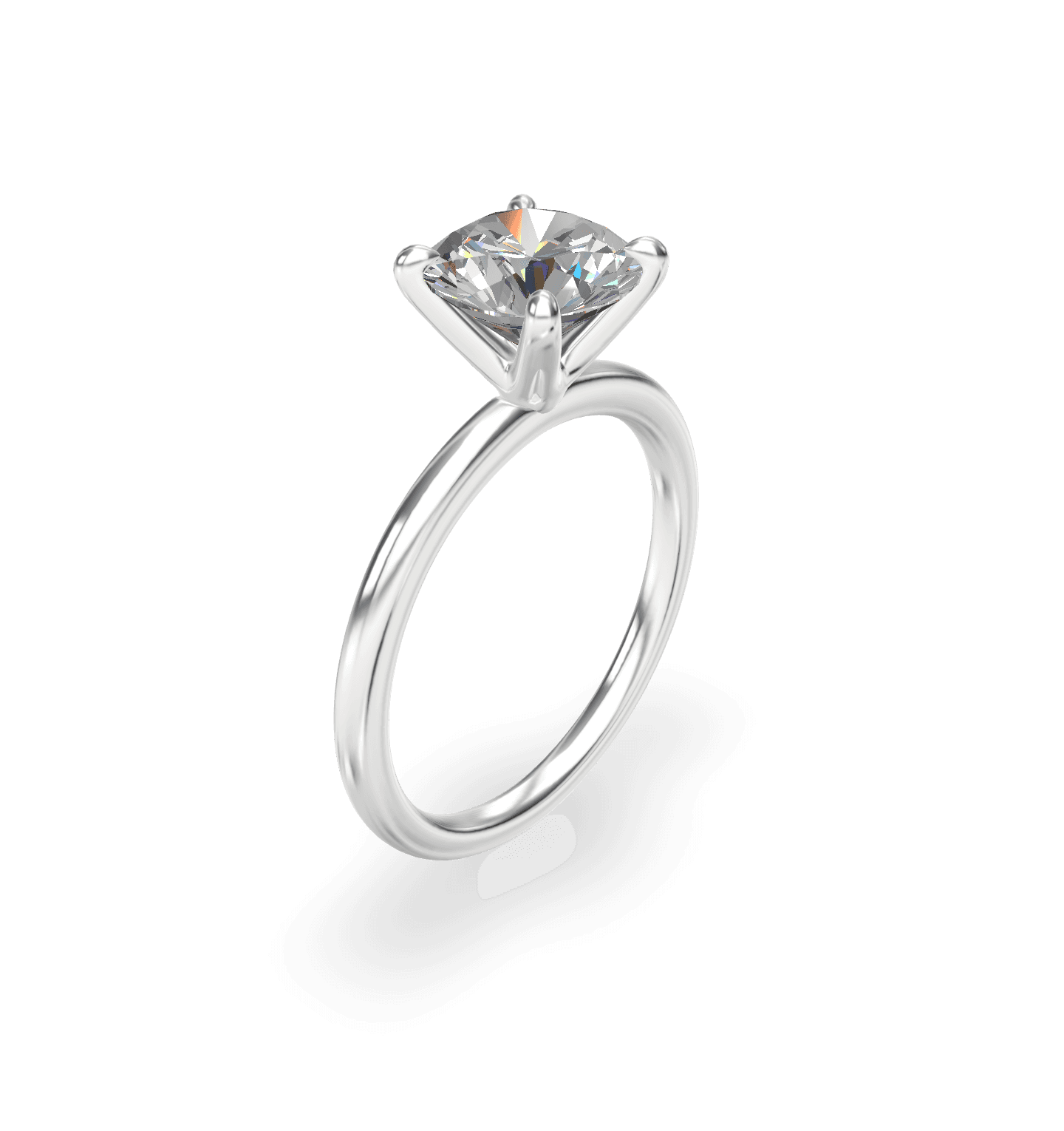
There are six main engagement ring styles, and they look genuinely different on the finger:
• Solitaire — one diamond, clean and classic. The most popular for a reason. • Halo — small diamonds surround the centre stone. Maximum sparkle. • Three-stone (Trilogy) — three diamonds symbolising past, present, future. • Pavé — tiny diamonds set into the band for all-over sparkle. • Vintage — antique-inspired with detailed metalwork. • Bezel — modern, protective, low-maintenance.
Use our 3D ring builder to see what each style actually looks like with different diamonds and metals. It’s much more useful than static photos.
Popular styles at a glance
Solitaire
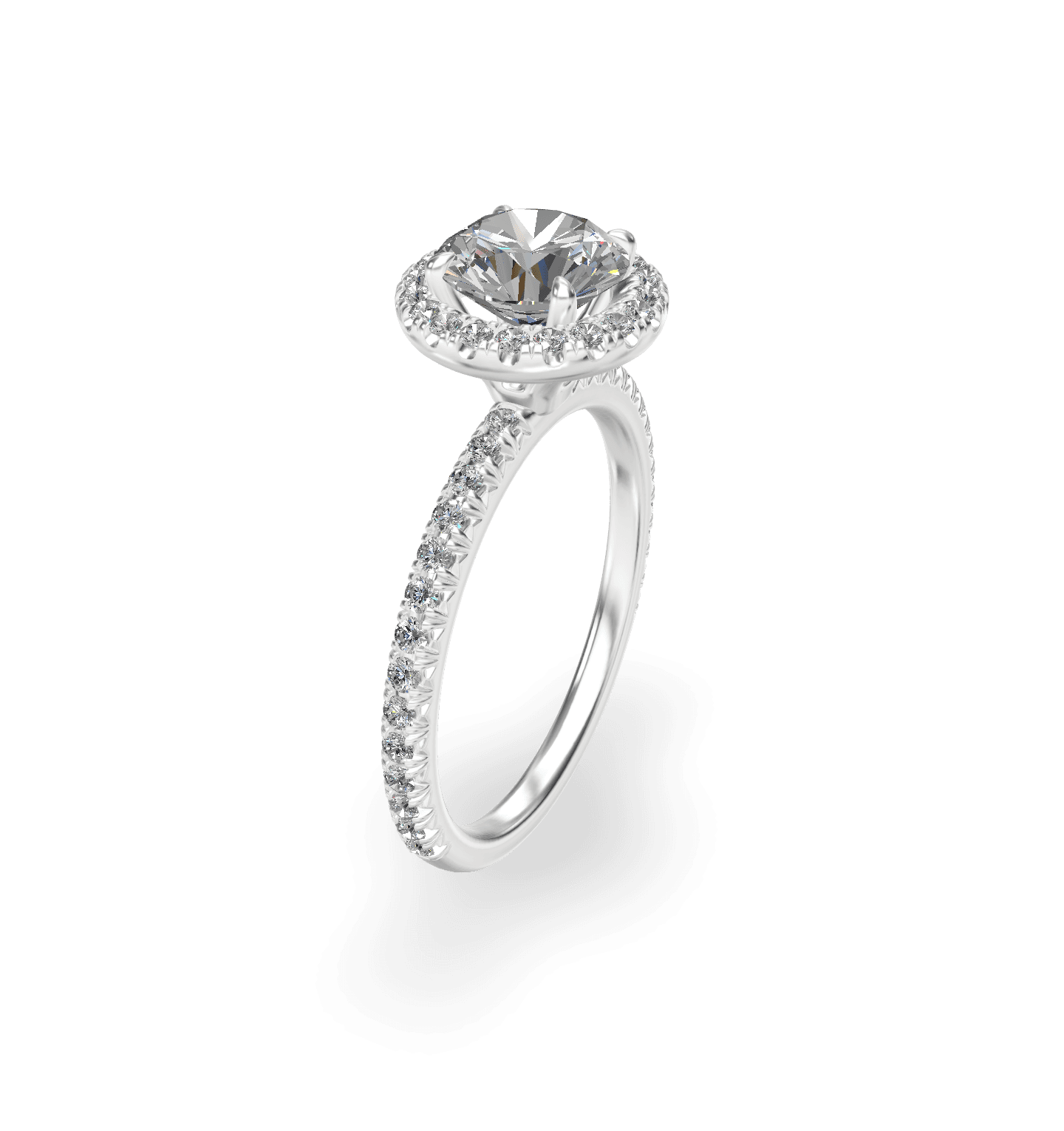
Halo
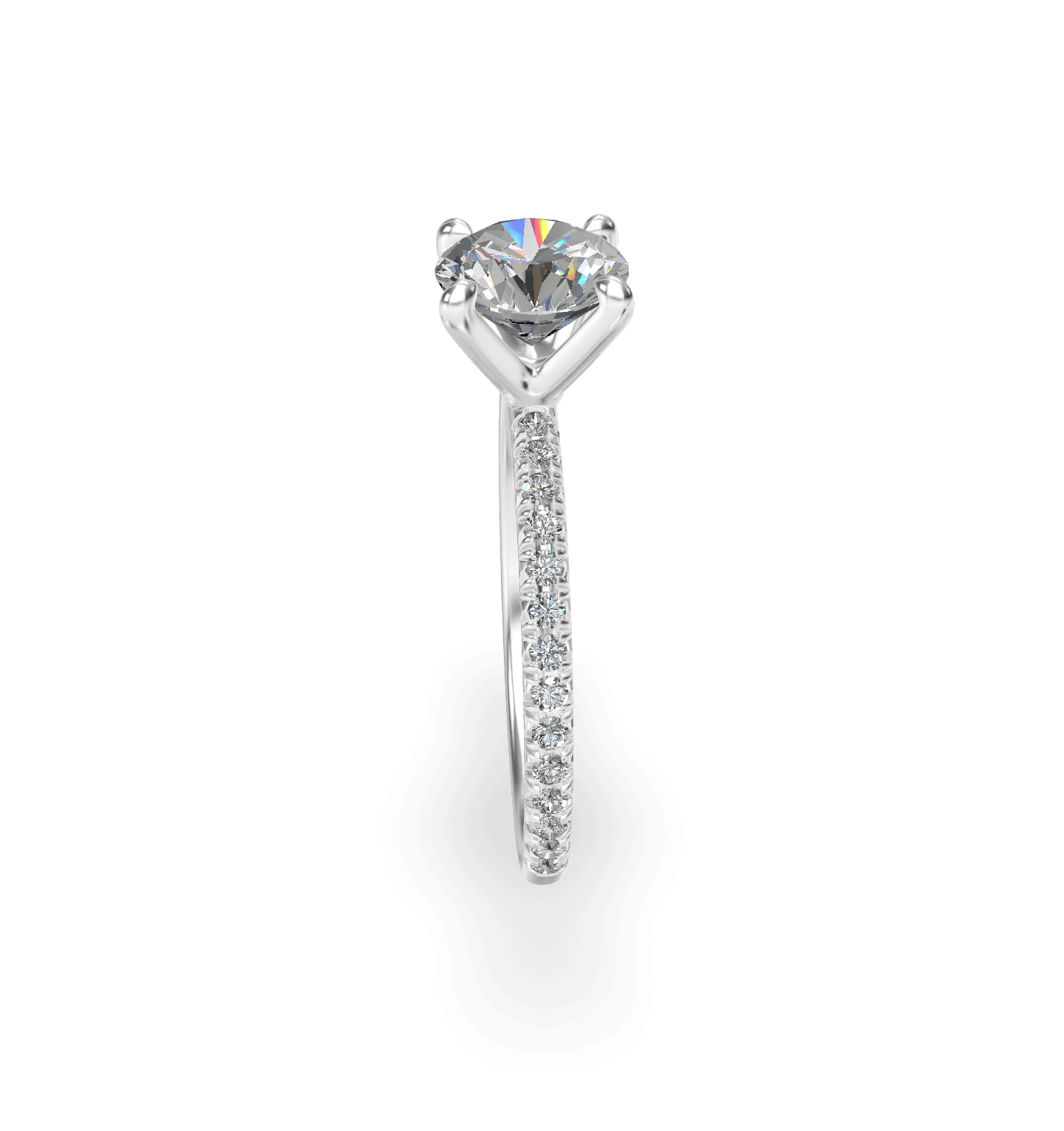
Pavé

Trilogy
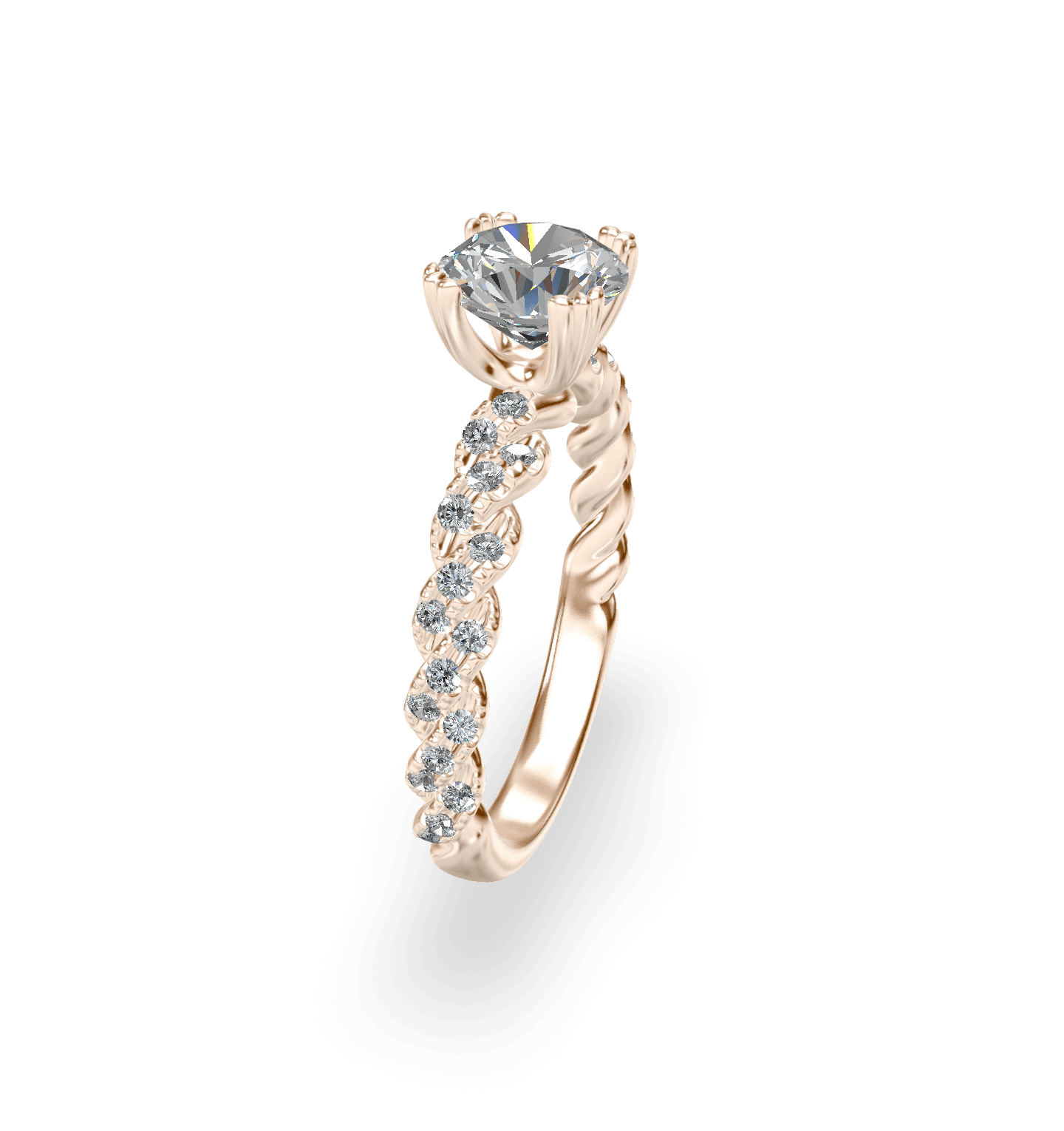
Vintage
Choose your diamond
This is where most people feel overwhelmed. It doesn’t need to be. Focus on three things:
Shape: Round brilliant is the default — maximum sparkle, always looks good. Oval is trending hard in 2026 — looks larger per carat and elongates the finger. Cushion and emerald give vintage vibes.
Quality: The 4Cs (cut, colour, clarity, carat) determine price. But here’s the secret: CUT is the most important by far. A well-cut 0.9ct diamond will outshine a poorly cut 1.2ct. Prioritise Excellent or Ideal cut, then compromise on colour (G–H looks white to the naked eye) and clarity (VS2 is clean to the eye).
Lab-grown vs natural: Same diamond, 30–50% cheaper. The trade-off is resale value. If that matters to you, go natural. If you’d rather have a bigger/better diamond for the same money, go lab-grown.
Diamond 4Cs explained simply →Select your metal
Three main options in the UK:
White gold (most popular) — silvery colour, needs rhodium re-plating every 1–2 years to stay bright. £200–£500 for the setting.
Yellow gold (classic) — warm tone, doesn’t need re-plating. Same price as white gold. Looks beautiful with champagne or warm-coloured diamonds.
Rose gold (trending) — pinkish tone, romantic feel. Very popular with Gen Z buyers. Same price range.
Platinum (£200–£500 more than gold) — naturally white, hypoallergenic, more durable. Develops a “patina” over time that some love and some don’t.
Pro tip: match the metal to the jewellery she already wears. If her watch and earrings are silver-toned, go white gold or platinum. If they’re gold, go yellow gold.
Same ring, three metals
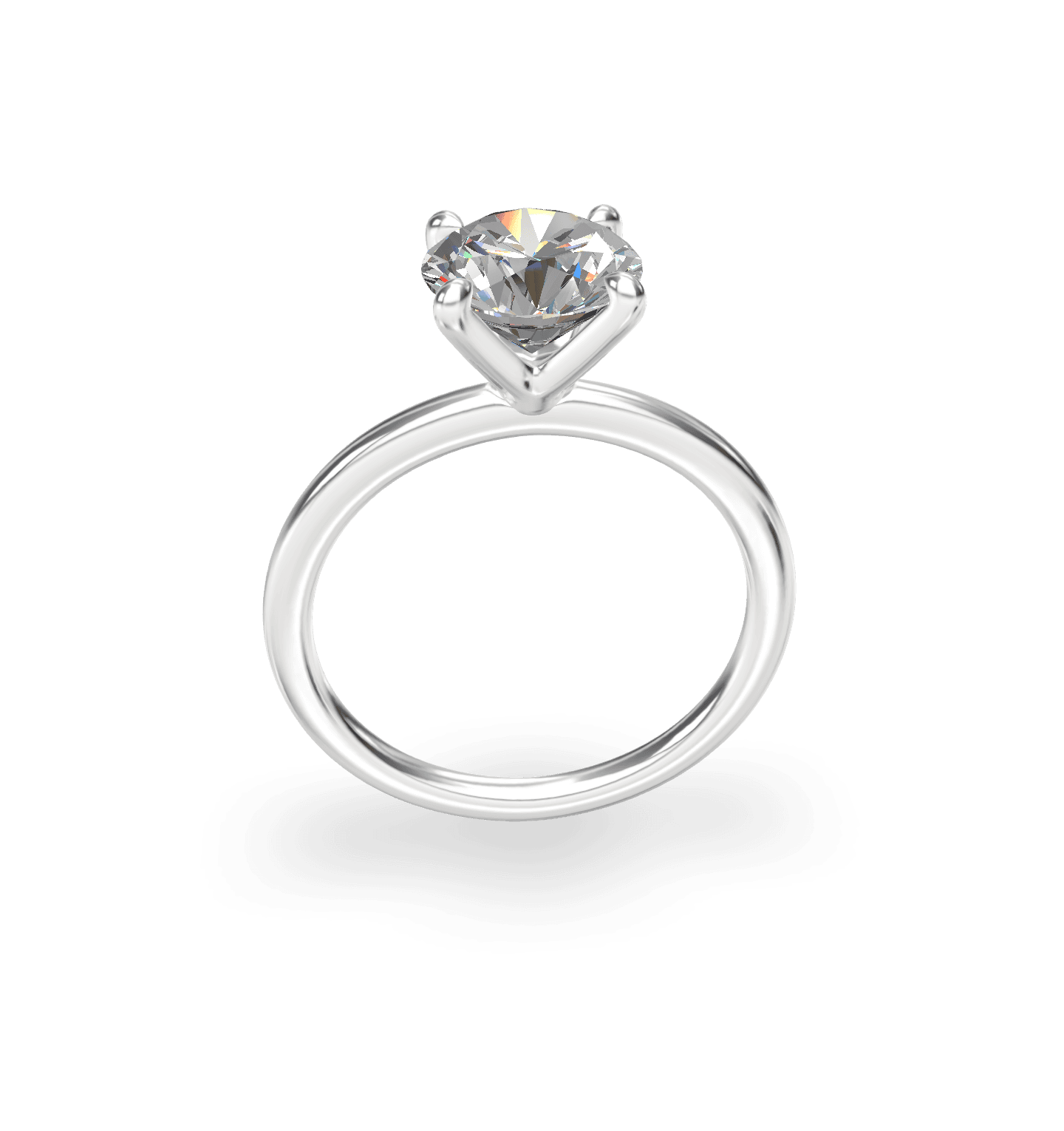
White Gold
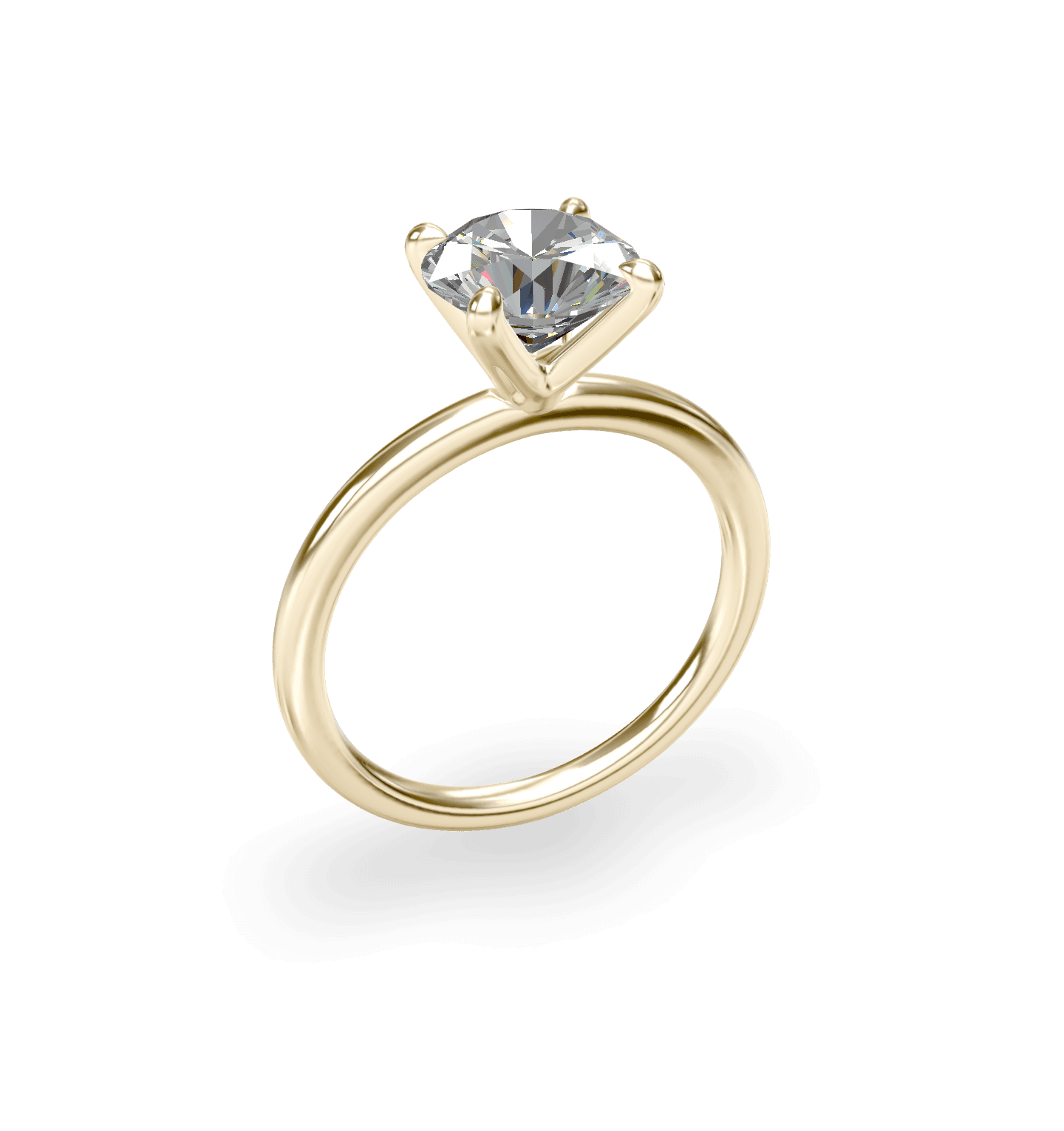
Yellow Gold
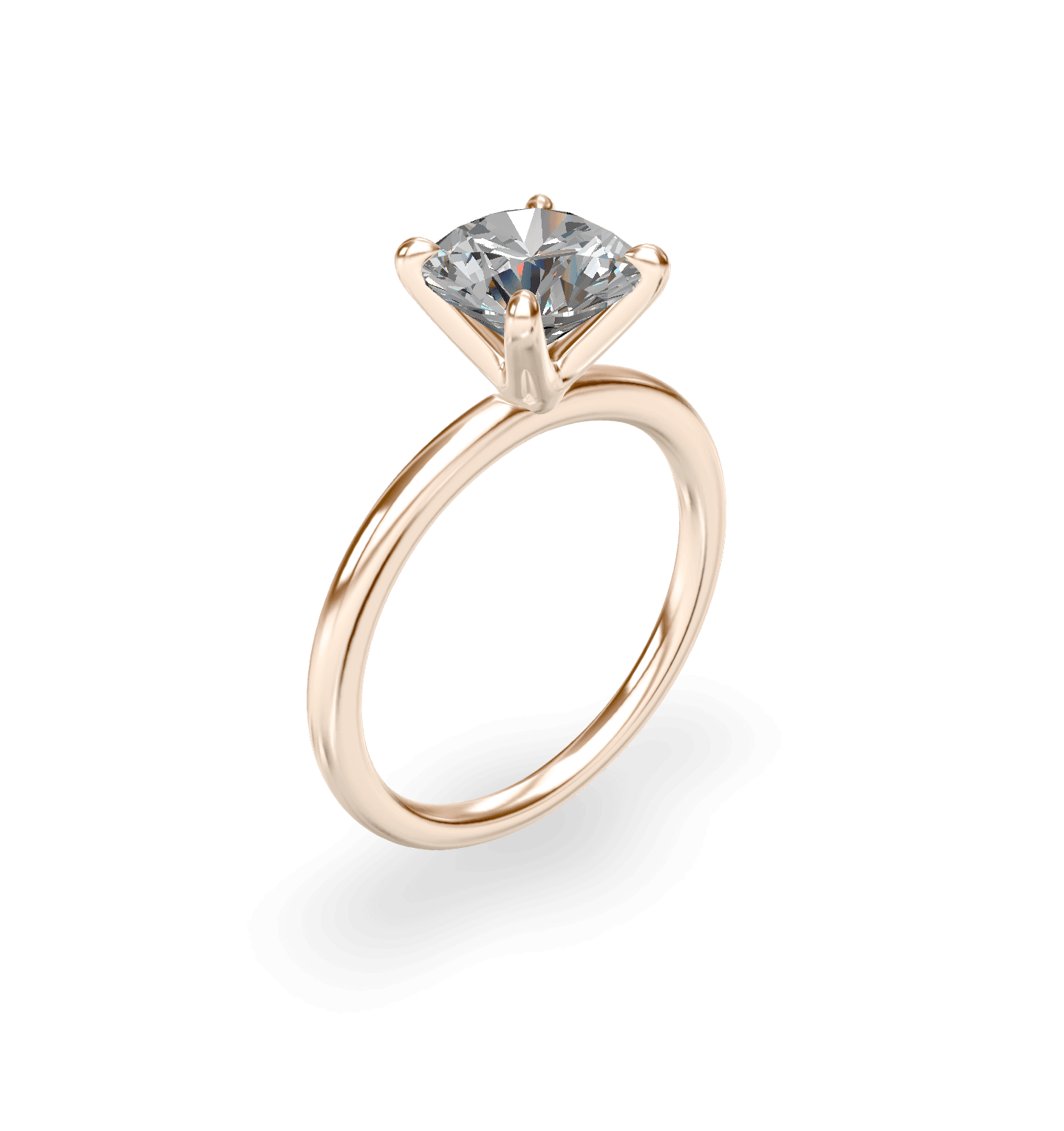
Rose Gold
Get the size right
This is stressful because you probably need to do it secretly. Options:
Best: borrow a ring she wears on her left ring finger, take it to a jeweller or measure the internal diameter (16.5mm = UK size L–M, the most common).
Good: trace a ring she wears on paper, or press it into a bar of soap for an impression.
Risky but works: ask her friend. Make sure it’s someone who can keep quiet.
If you genuinely can’t find out, UK size L or M is statistically the most common for women. Most jewellers will resize for free within 30 days.
UK ring size chart →Decide where to buy
UK buyers have excellent options:
Hatton Garden (London) — 50+ specialists in one street. Typically 20–40% cheaper than high-street chains. Walk in, compare, negotiate.
Online jewellers — MOH London, 77 Diamonds, Vashi. Wider selection, competitive pricing, easy returns. Best if you know what you want.
Regional independents — Manchester’s Northern Quarter, Birmingham’s Jewellery Quarter, Edinburgh’s Rose Street. Good value, personal service.
High-street chains — Convenient but typically 30–50% more expensive than independents for equivalent quality.
Or use our 3D ring builder to design your exact ring, then get quotes from 2–3 vetted UK jewellers. Free, no obligation.
Design your ring and get quotes →Ready to start designing?
Try our 3D ring builder — 66,420 combinations across 10 diamond shapes, 15 settings, and 15 band styles. Design yours and get quotes from UK jewellers.
Open the ring builder