Engagement Rings UK Editorial
Contributing Editor
Diamond 4Cs Explained
Cut, Colour, Clarity, Carat
The 4Cs determine a diamond's quality and price. But they're not equally important. This guide tells you which to prioritise, where to save, and how to read a grading certificate without a gemology degree.
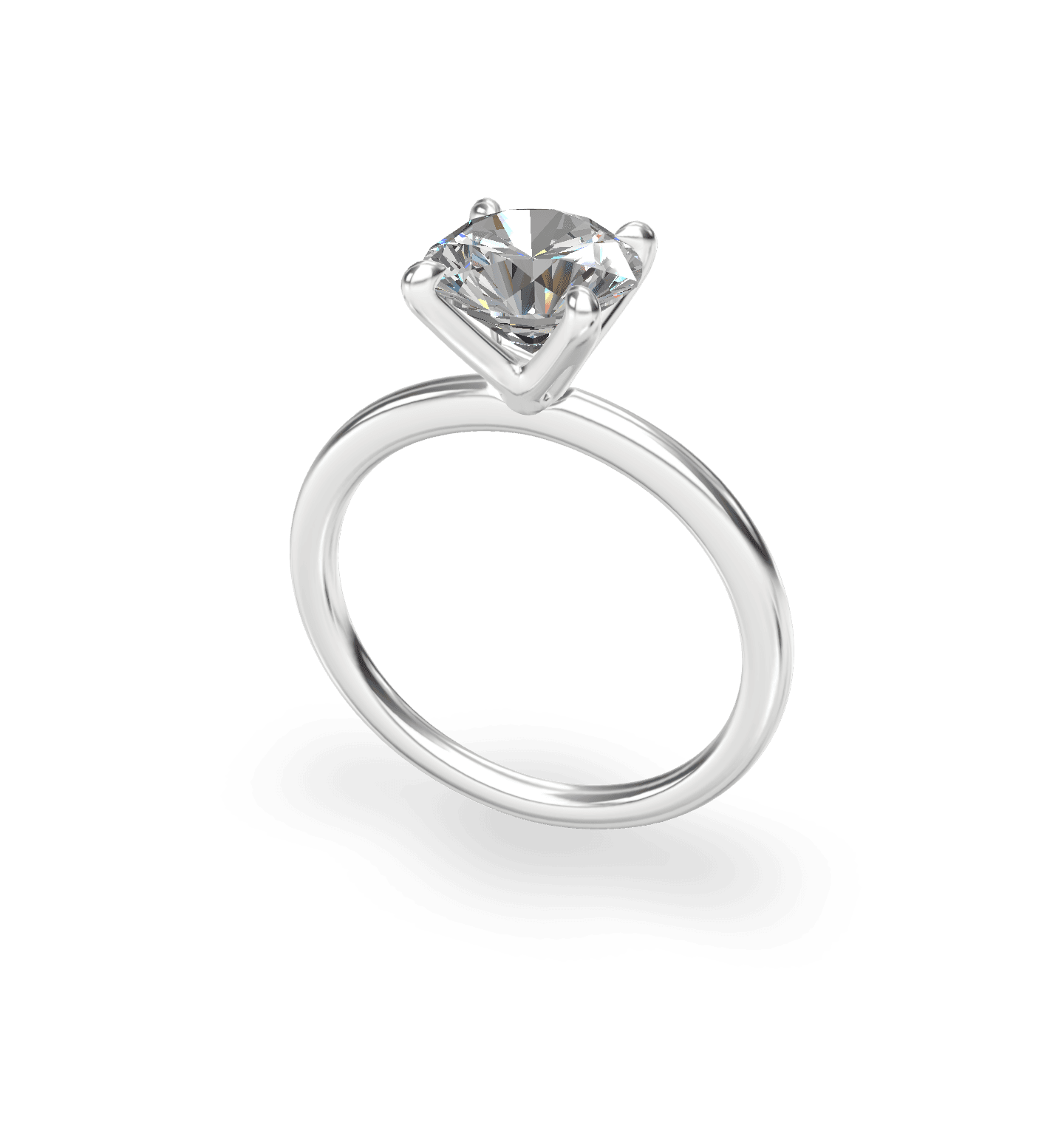
What Are the 4Cs?
The 4Cs — Cut, Colour, Clarity, and Carat — are the universal grading system created by the Gemological Institute of America (GIA) in the 1950s. Every reputable diamond certificate grades these four characteristics, and together they determine roughly 95% of a diamond's value.
Here's what most guides won't tell you: the 4Cs are not equally important. If you get one thing right, make it the cut. A beautifully cut diamond will mask colour tints and make inclusions harder to see. A poorly cut diamond will look lifeless regardless of its colour or clarity grade.
The order of priority for engagement ring buyers is: Cut > Carat > Colour > Clarity. Let's break each one down.
Cut — The Most Important C
Cut doesn't refer to a diamond's shape (round, oval, cushion). It refers to how well the diamond's facets interact with light. A well-cut diamond takes in light through the top, bounces it around internally, and fires it back to your eye as brilliance (white light) and fire (rainbow flashes).
A poorly cut diamond — too deep or too shallow — leaks light out of the bottom or sides. It looks dull, dark, or glassy. No amount of colour or clarity can fix this.
Our rule: never compromise on cut. An Excellent-cut 0.8ct diamond will outperform a Good-cut 1.2ct every single time.
How cut affects light performance
Ideal Cut
Light reflects back through the top
Too Shallow
Light leaks out the bottom
Too Deep
Light escapes through the sides
| Grade | What It Means | Recommended? |
|---|---|---|
| Excellent / Ideal | Maximum brilliance and fire. Always choose this. | Yes |
| Very Good | Slight light leakage — still very beautiful. Acceptable if budget is tight. | Yes |
| Good | Noticeable light leakage. Fine for smaller accent stones. | No |
| Fair | Dull appearance. Avoid for centre stones. | No |
| Poor | No brilliance. Never buy this grade. | No |
Note: GIA only grades cut for round brilliant diamonds. For fancy shapes (oval, cushion, emerald, pear), you'll need to rely on proportions, symmetry, and visual inspection. A good jeweller will help you evaluate these.
Popular diamond shapes
Round
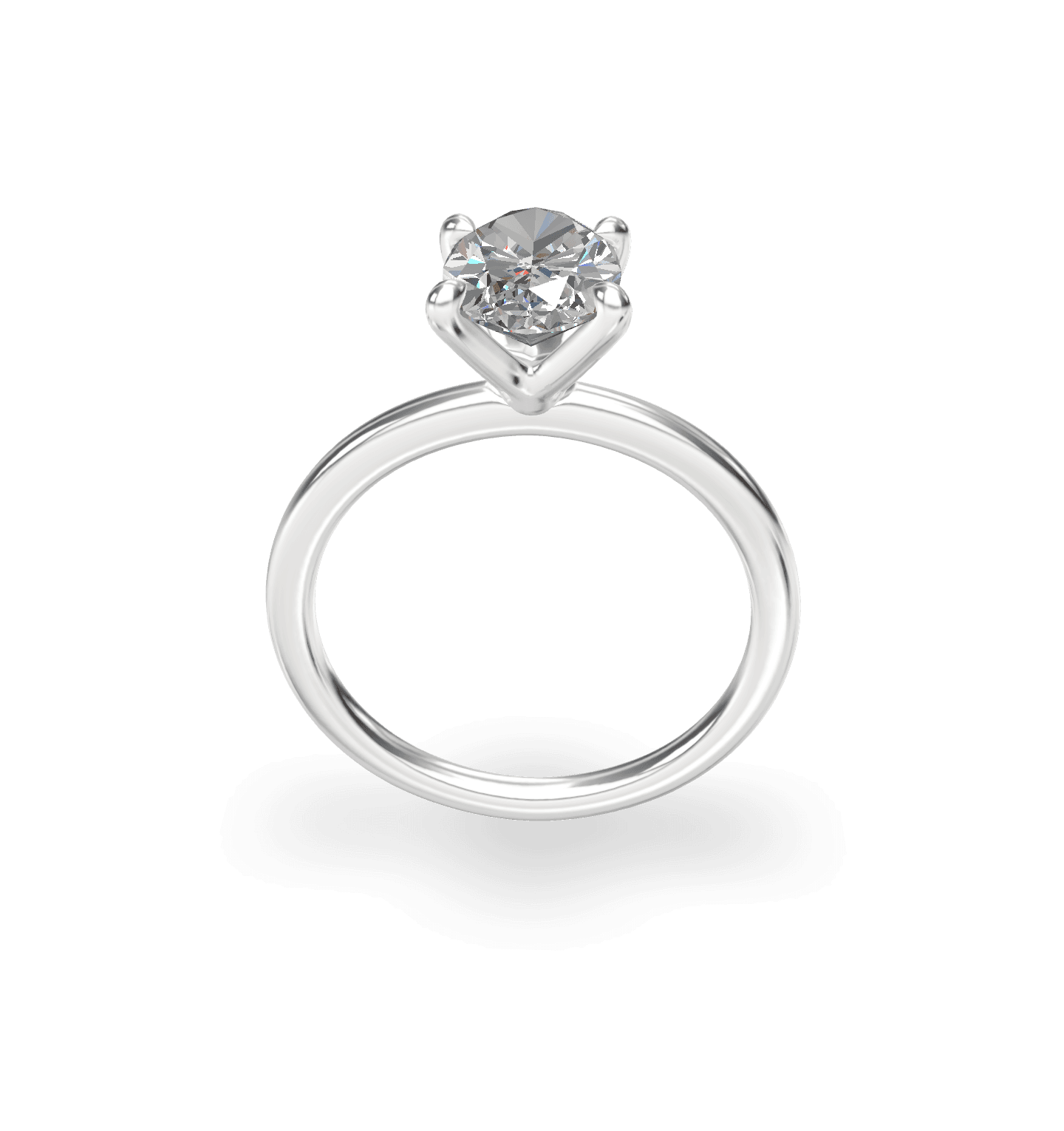
Oval
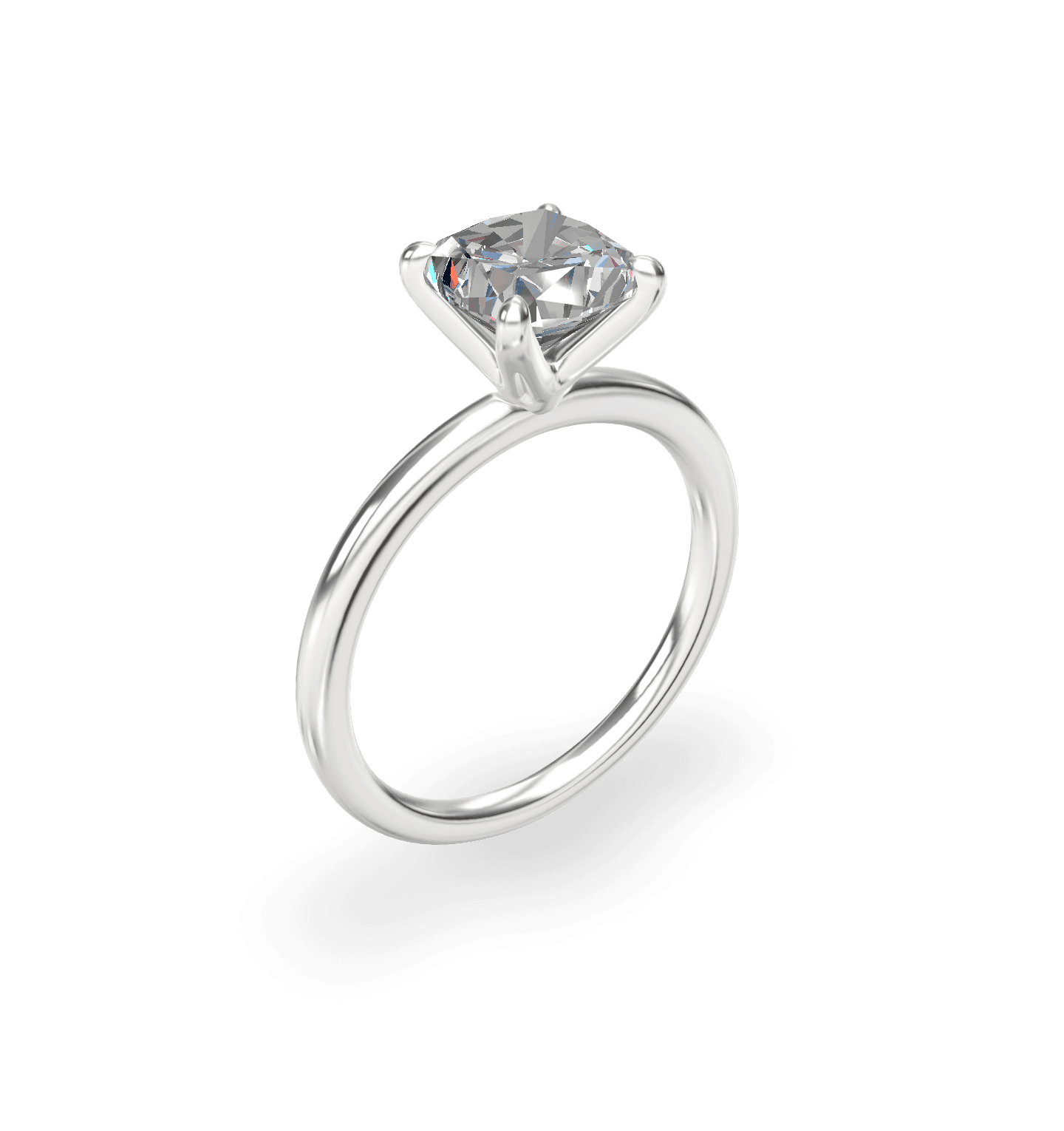
Cushion
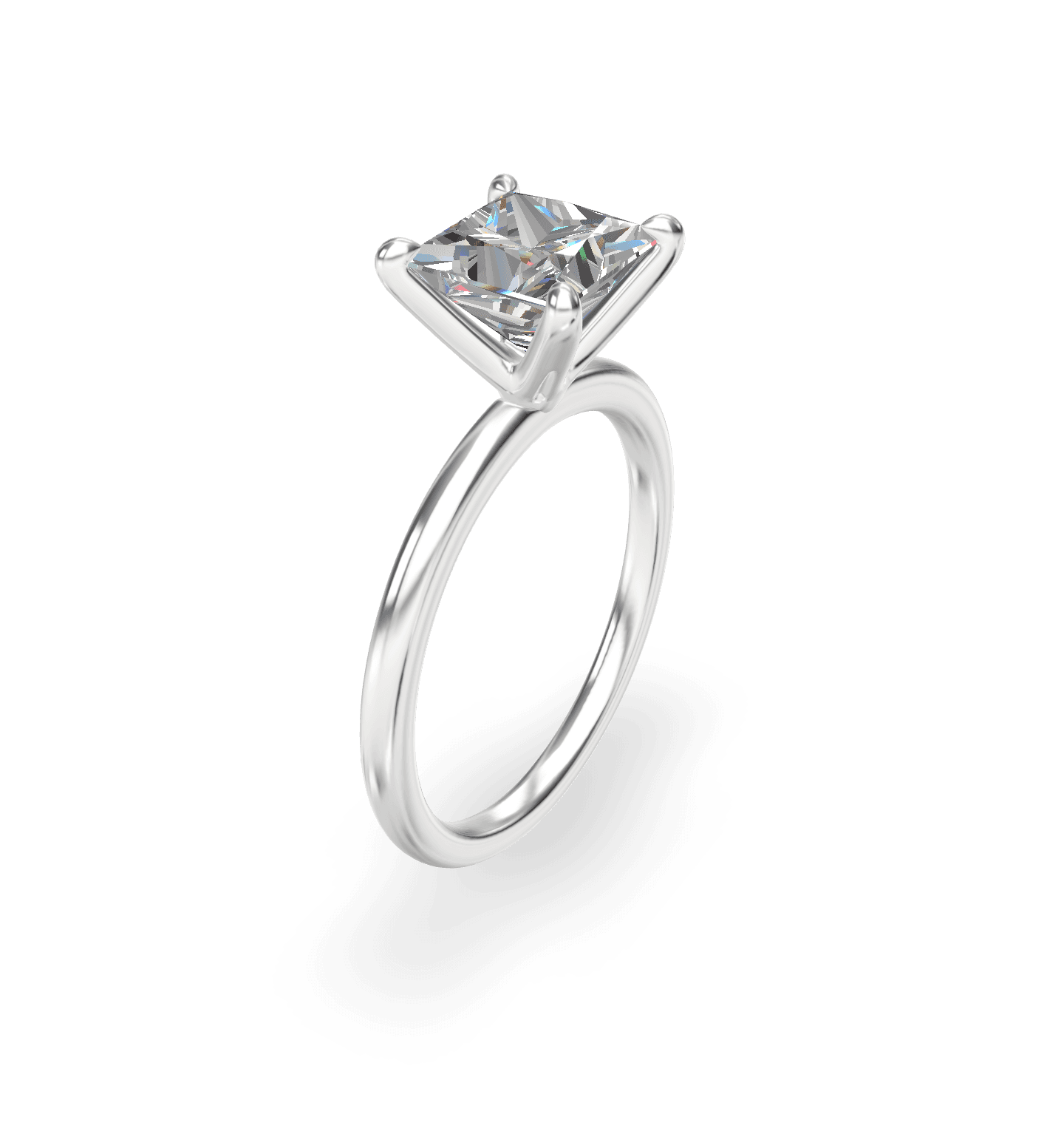
Princess
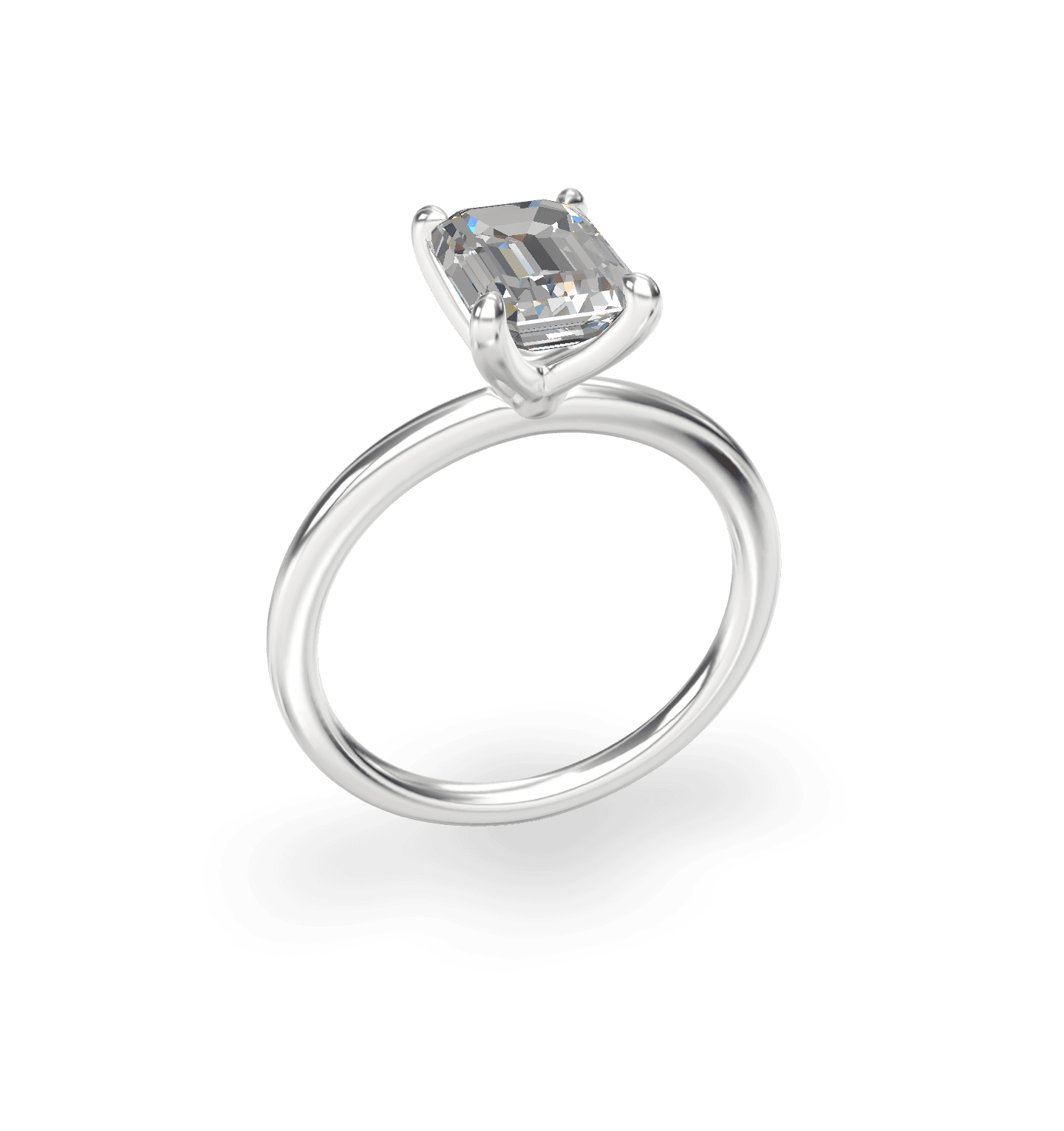
Emerald
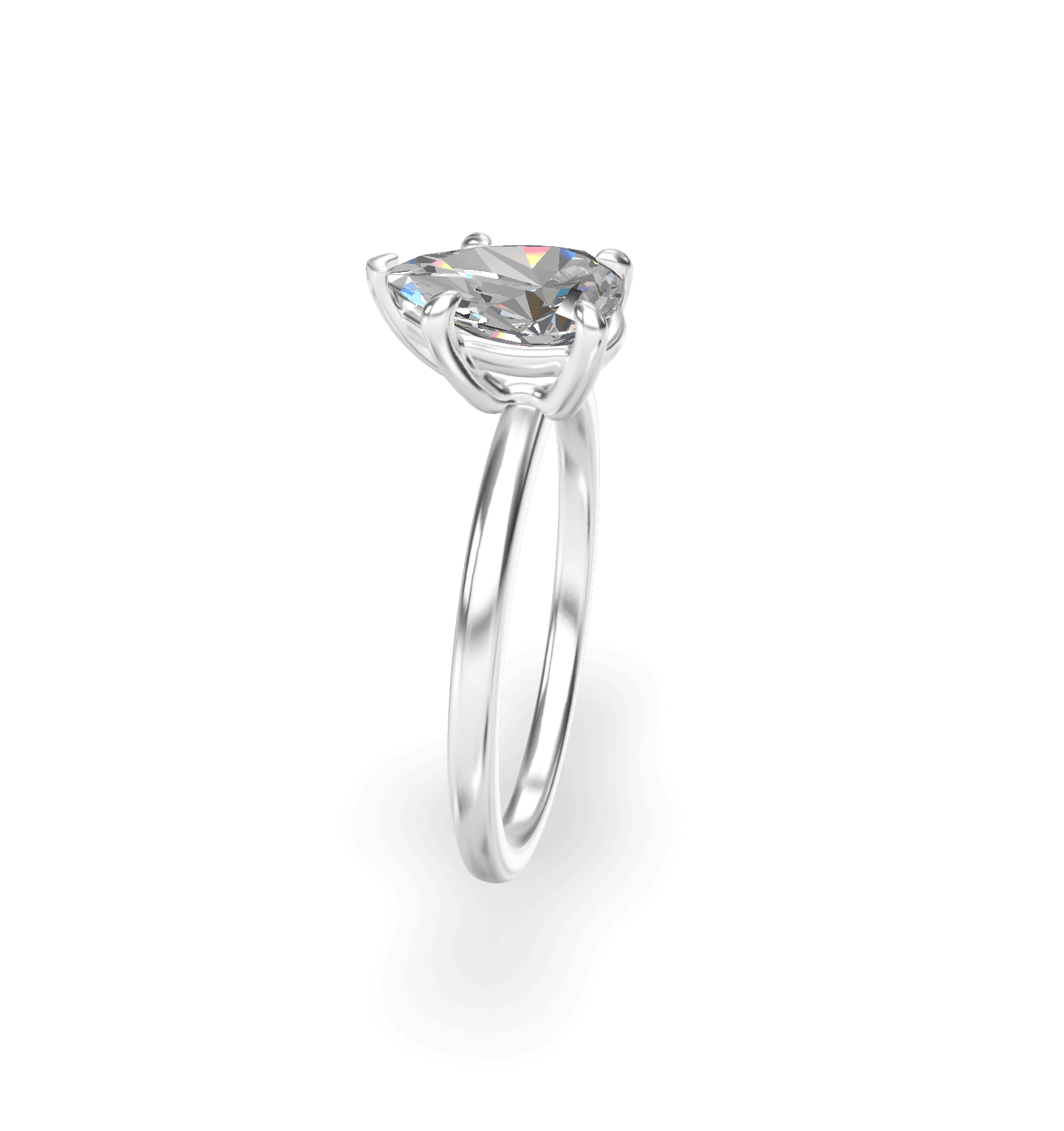
Pear
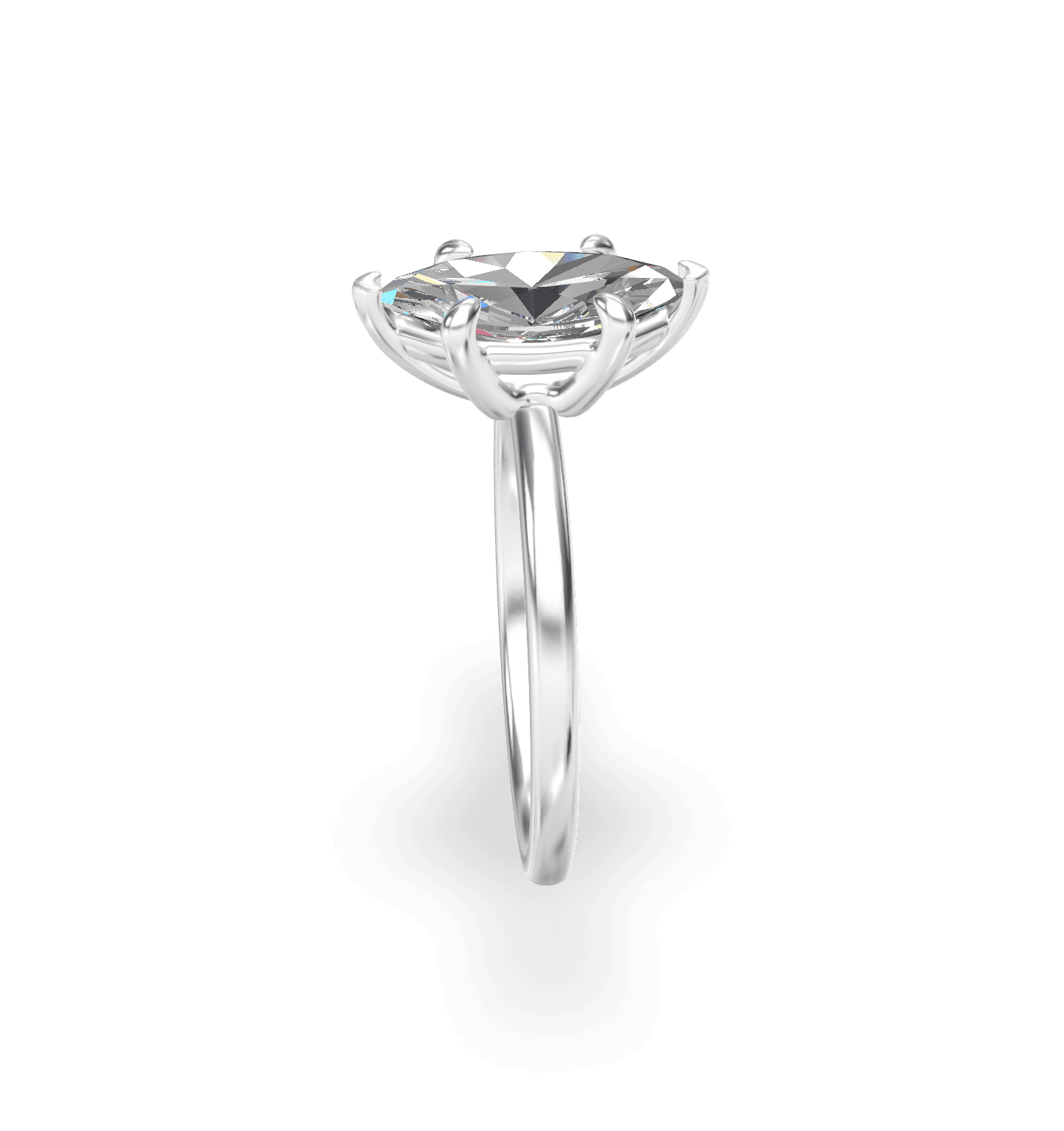
Marquise
Colour — The G–H Sweet Spot
Diamond colour is graded from D (completely colourless) to Z (noticeably yellow or brown). Counterintuitively, less colour means higher grade. The D–F range commands a steep premium, but the difference between F and G is essentially invisible without laboratory equipment.
In a white gold or platinum setting, G–H colour diamonds face up perfectly white. In yellow or rose gold, you can safely go to I–J since the warm metal complements any faint body colour. This alone can save you £300–£800 on a 1.0ct diamond.
Colour scale D → Z
| Grade Range | Category | What You See | Our Take |
|---|---|---|---|
| D–F | Colourless | No visible colour even under magnification. Premium pricing. | Unnecessary for most — visible difference from G–H only under laboratory conditions. |
| G–H | Near Colourless | No colour visible to the naked eye. Looks white in any setting. | Best value. Our recommendation for white gold and platinum. |
| I–J | Near Colourless | Faint warmth visible side-by-side with D–F, not on its own. | Great for yellow gold or rose gold settings where warm tones blend in. |
| K–M | Faint Yellow | Noticeable warmth. Can look beautiful in yellow gold. | Only in yellow gold settings. Significant savings. |
Clarity — VS2 Is Fine
Clarity measures the presence of tiny natural imperfections called inclusions (internal) and blemishes (surface). Nearly every diamond has them — they're how nature formed the crystal over billions of years.
The key concept is “eye-clean” — whether inclusions are visible to the naked eye when the diamond is set in a ring and viewed from a normal distance. VS2 diamonds are virtually always eye-clean, which is why we recommend them as the best value grade.
Paying for VVS or Flawless clarity is paying for something only a gemologist with a loupe will ever see. That money is better spent on cut quality or carat weight.
Clarity grades — high to low
| Grade | Description | Our Recommendation |
|---|---|---|
| FL / IF | Flawless. No inclusions under 10x magnification. | Extremely rare and expensive. Not worth the premium for engagement rings. |
| VVS1–VVS2 | Very Very Slightly Included. Inclusions invisible even to trained eyes under 10x loupe. | Excellent quality but hard to justify the cost difference from VS grades. |
| VS1–VS2 | Very Slightly Included. Inclusions visible under 10x loupe but invisible to the naked eye. | The sweet spot. Eye-clean with excellent value. Our recommendation. |
| SI1–SI2 | Slightly Included. Inclusions may be visible to the naked eye in SI2. | SI1 can be eye-clean in round brilliants. Inspect individually. Good budget option. |
| I1–I3 | Included. Visible inclusions that affect brilliance. | Avoid for engagement rings. |
Carat — Magic Numbers and How to Save
Carat is the diamond's weight, not its size. One carat equals 0.2 grams. But “bigger” doesn't always mean “better looking” — a poorly cut 1.5ct diamond can face up smaller than a well-cut 1.2ct because the weight is hiding in the depth.
Diamond prices jump at “magic numbers”: 0.50, 1.00, 1.50, and 2.00 carats. A 0.98ct diamond can cost 10–15% less than a 1.01ct with the same specifications. The visual difference? Absolutely zero — we're talking about 0.1mm in diameter.
Smart buying strategy: search for diamonds in the 0.90–0.99ct range if you want “about a carat.” You'll save £500–£1,500 (natural) or £150–£400 (lab-grown) compared to the full 1.00ct threshold.
Carat size comparison — same ring, different weights
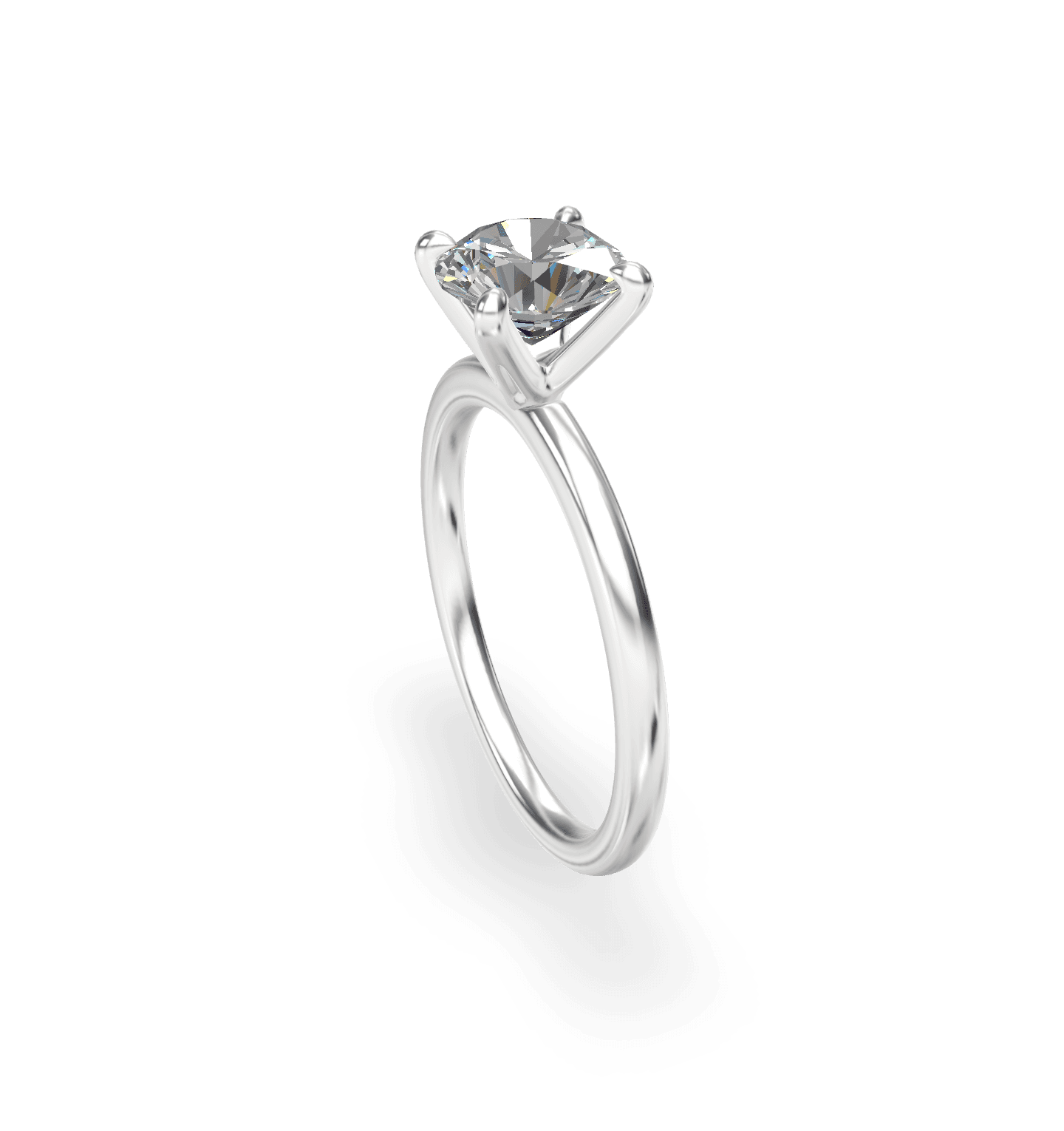
1.00 ct
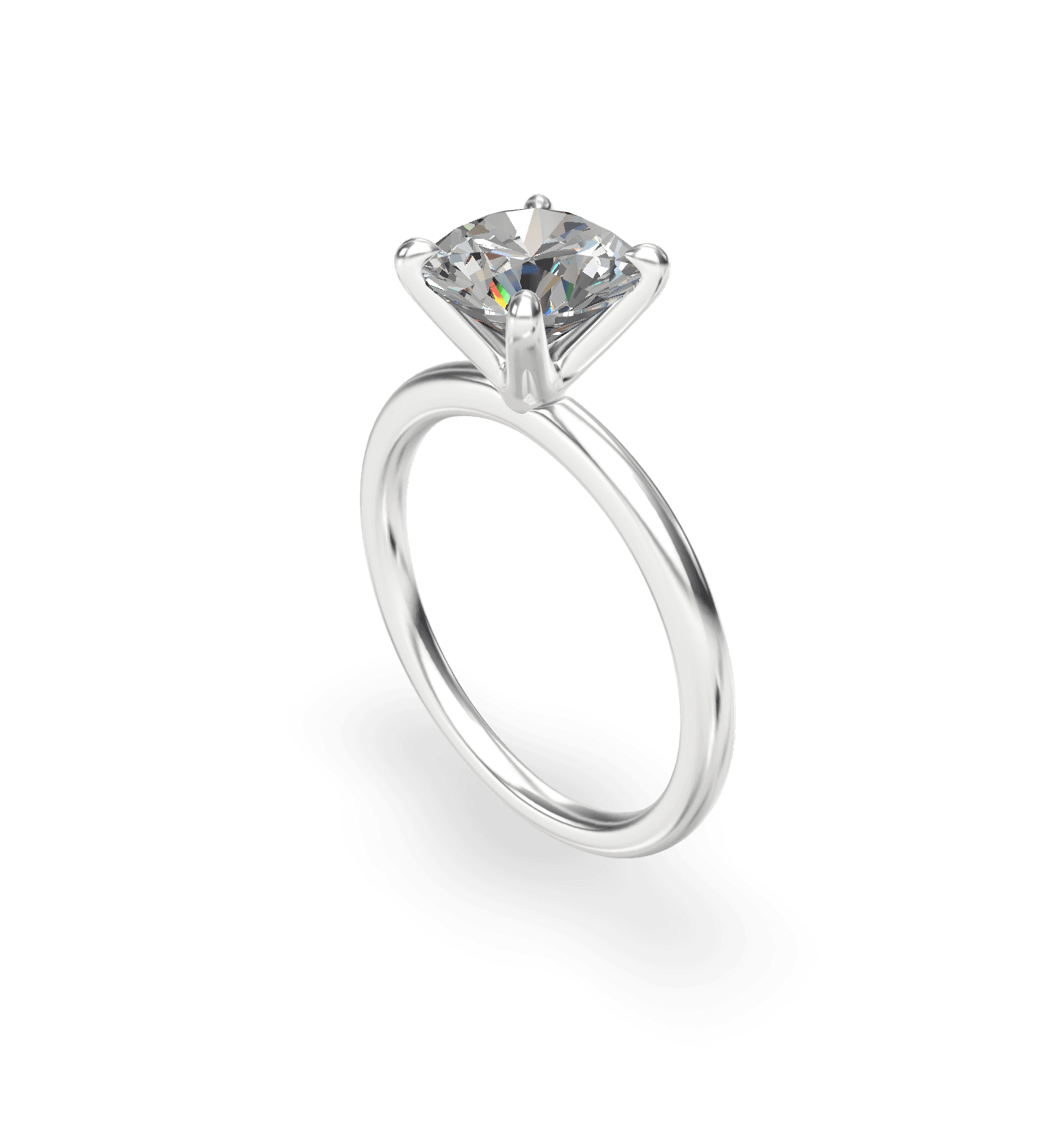
1.50 ct
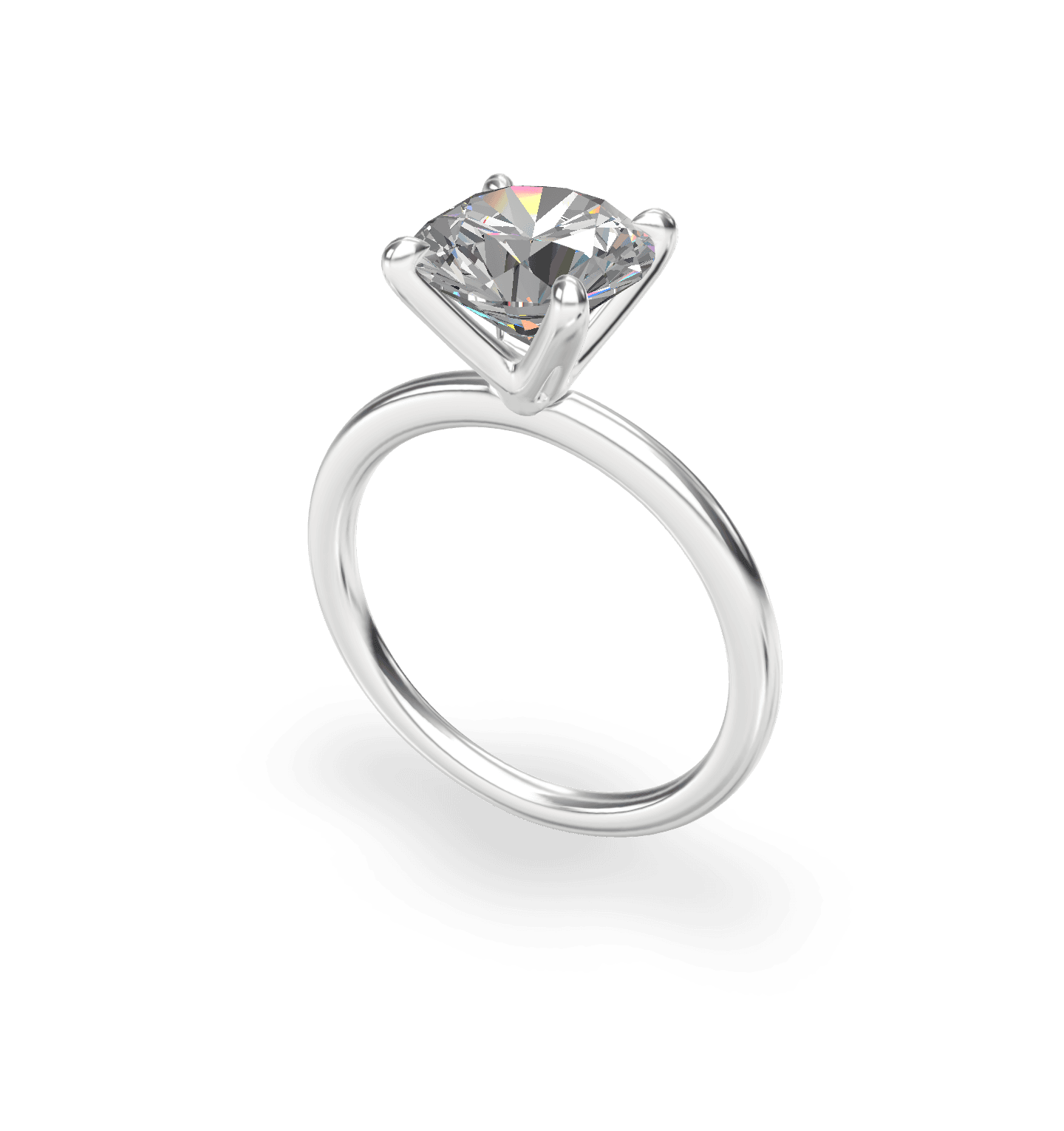
2.00 ct
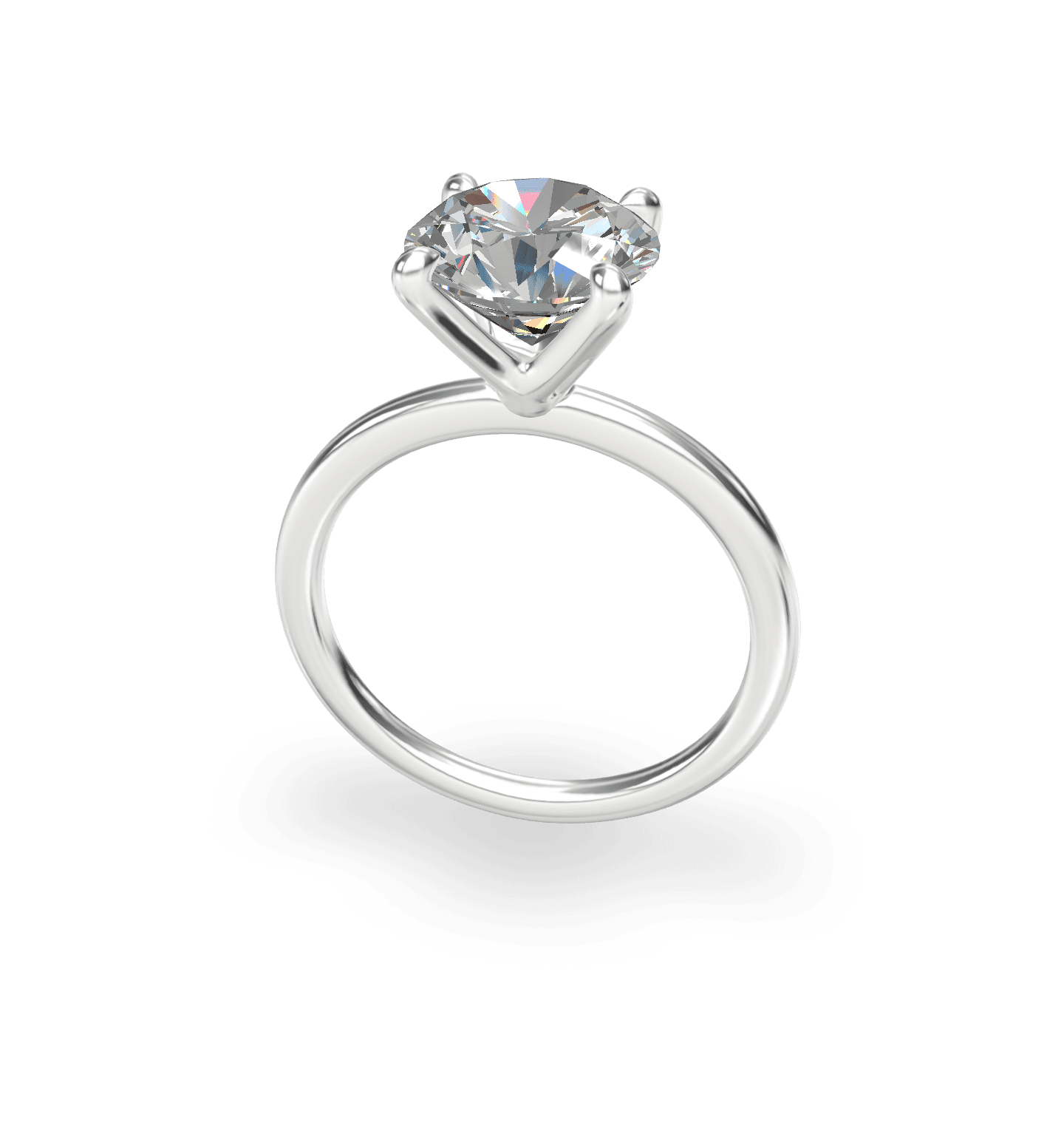
2.50 ct
Also consider that different shapes face up differently per carat. An oval or marquise shape looks 10–15% larger than a round brilliant of the same carat weight, because the elongated form spreads weight across a larger surface area. See our cost guide for detailed pricing by carat weight.
How to Prioritise the 4Cs
If you remember nothing else from this guide, remember this order:
- Cut: Always Excellent or Ideal. This is non-negotiable. A brilliant cut makes everything else look better.
- Carat: Choose the size that fits your budget after locking in Excellent cut. Buy just below magic numbers for savings.
- Colour: G–H for white metals, I–J for warm metals. Save the D–F premium for something else.
- Clarity: VS2 is the sweet spot. Don't pay for invisible perfection.
For a practical example: a 1.0ct, Excellent cut, G colour, VS2 clarity diamond offers the best balance of beauty and value. In lab-grown, that's roughly £900–£1,400. In natural, it's £3,500–£5,500.
Always ask for a GIA or IGI certificate. These are the two most respected grading laboratories. Avoid uncertified diamonds or certificates from lesser-known labs — their grading can be 1–2 grades more generous, which means you're paying for quality you're not getting.
See diamonds in context
Our 3D ring builder lets you pair 10 diamond shapes with 15 settings and 15 band styles — 66,420 combinations. See how different specs actually look on a ring.
Open the ring builder