Engagement Rings UK Editorial
Contributing Editor
UK Engagement Ring
Trends 2026
Oval is king, lab-grown is mainstream, and rose gold is making a comeback. Here's what UK buyers are actually choosing this year — based on jeweller reports, search data, and industry trends.
Diamond Shape Trends
The biggest shift in UK engagement ring buying is happening in diamond shapes. Oval has firmly taken the top spot, and emerald cuts are the fastest-growing shape of the year.
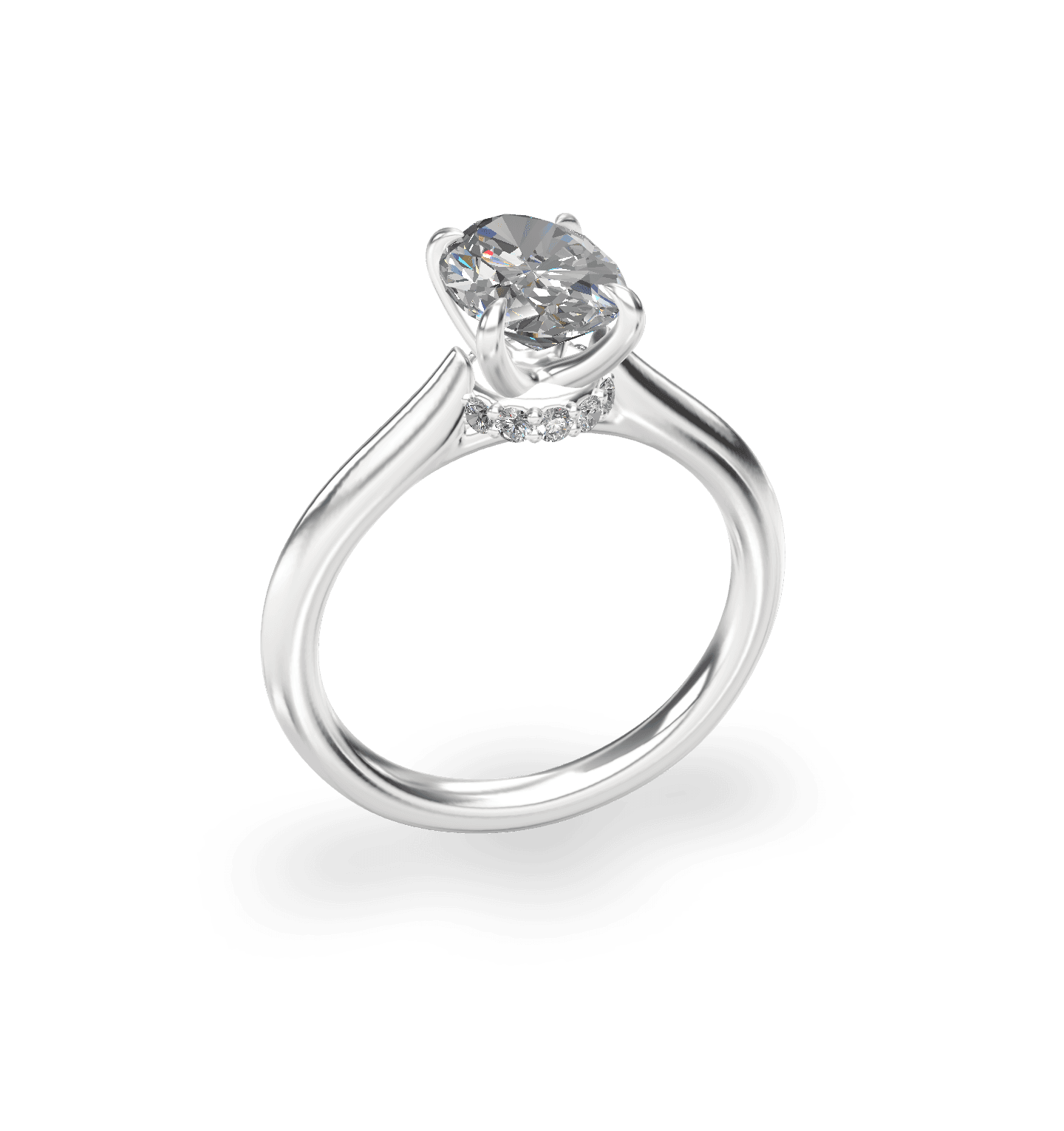
Oval
The dominant shape of 2026. Oval looks larger per carat than round, flatters the finger, and photographs beautifully. It overtook round brilliant in late 2025 and shows no sign of slowing.
Round Brilliant
Still the second most popular shape and the most brilliant cut optically. Round brilliant is the classic — it never truly goes out of fashion, but it's no longer the automatic default.
Emerald
The biggest growth story of 2025-2026. Emerald cuts appeal to buyers who want something architectural and sophisticated rather than sparkly. They look stunning in east-west settings.
Pear
Pear-shaped diamonds are having a moment, particularly in solitaire and toi-et-moi settings. The elongated silhouette makes fingers appear longer and slimmer.
Cushion
Cushion cuts dominated the halo era but are now declining as halos themselves lose popularity. Still beautiful, but increasingly seen as a 2018-2020 choice.
Radiant
A niche but loyal following. Radiant combines the rectangular outline of emerald with the brilliance of round — an underrated choice for buyers who want both sparkle and clean lines.
Setting Trends
The move away from maximalism continues. UK buyers in 2026 are choosing cleaner, more architectural settings that let the centre stone do the talking.
Solitaire — still dominant
The solitaire remains the most popular setting at roughly 45% of UK sales. The trend is towards slightly thicker bands (1.8-2.2mm vs the old micro-pavé standard of 1.3-1.5mm) for a more substantial feel.
Toi-et-moi — the breakout star
Two stones side by side, symbolising two people coming together. The toi-et-moi setting has jumped from niche to roughly 8% of UK sales, driven by celebrity influence and the ability to mix diamond shapes (e.g., pear + oval). Expect this to keep growing.
Trilogy — a quiet comeback
The classic three-stone ring is being reinterpreted with mixed shapes — an emerald centre flanked by trapezoid or bullet-cut side stones, for example. This modern take on a traditional design accounts for about 7% of sales.
Halo — fading
The halo setting has dropped from its 30%+ peak in 2019 to around 12% in 2026. It's still a valid choice — a halo makes the centre stone appear larger — but it's no longer the default “safe” choice it once was.
Metal Trends
Metal preferences are shifting too. Here's the current UK breakdown.
| Metal | Share | Trend | Notes |
|---|---|---|---|
| Platinum | ~45% | Stable | Still the UK's preferred metal for engagement rings |
| White gold (18ct) | ~30% | Slight decline | Losing share to platinum as price gap narrows |
| Rose gold (18ct) | ~15% | ↑ Rising | Comeback from 2023 dip; pairs well with oval |
| Yellow gold (18ct) | ~10% | ↑ Rising | Vintage revival; popular with emerald and cushion cuts |
For a deeper dive, see our complete guide to engagement ring metals.
Lab-Grown Diamonds: Now Mainstream
The most significant structural shift in the UK engagement ring market is the normalisation of lab-grown diamonds. They now account for an estimated 35-40% of diamond engagement ring sales in the UK, up from ~20% in 2024.
Key drivers: they're 60-70% cheaper than natural equivalents, optically identical, and increasingly accepted socially. The stigma has largely evaporated among buyers under 35.
What this means in practice
- A 1.5ct lab-grown diamond costs roughly £1,200-£1,800 vs £5,000-£8,000 for a natural equivalent
- Buyers are trading up — choosing a 2ct lab-grown instead of a 1ct natural for the same budget
- Hatton Garden jewellers report that lab-grown now accounts for the majority of enquiries from buyers under 30
- Resale value remains the main concern — lab-grown diamonds have minimal resale value compared to natural
Read our lab-grown vs natural comparison for a full breakdown.
What's Falling Out of Favour
Not every trend has staying power. Here's what's declining in the UK market in 2026.
Cushion-cut halos
The combination that defined the late 2010s now feels distinctly dated to many buyers. Cushion and halo separately are fine, but together they've become a visual shorthand for “five years ago.”
Princess-cut diamonds
Once the second most popular shape, princess cuts have dropped to under 3% of UK sales. The sharp corners are prone to chipping, and the square silhouette has been replaced by the softer curves of oval and pear.
Ultra-thin bands
The micro-pavé 1.3mm band that dominated Instagram is giving way to more substantial designs. Jewellers report more requests for 1.8-2.5mm bands that feel sturdier and are less prone to warping over time.
What's Coming Next
Based on jeweller conversations, search trends, and early signals from 2026 collections, here's what we expect to gain momentum.
East-west settings
Elongated shapes (emerald, oval, marquise) set horizontally rather than vertically. It's a subtle twist that creates a completely different look and feels fresh without being gimmicky.
Coloured gemstone accents
Not replacing diamonds, but complementing them. Sapphire side stones, emerald accents, and coloured hidden halos underneath the centre stone are appearing in more UK jewellers' collections.
Mixed metal designs
A yellow gold band with a platinum head, or vice versa. Mixed metals allow buyers to have a warm-toned band that still showcases the diamond in a white metal setting for maximum contrast.
See these trends in 3D
Try different shapes, settings, and metals in our free ring builder. No signup required — just design and screenshot.
Open the ring builder